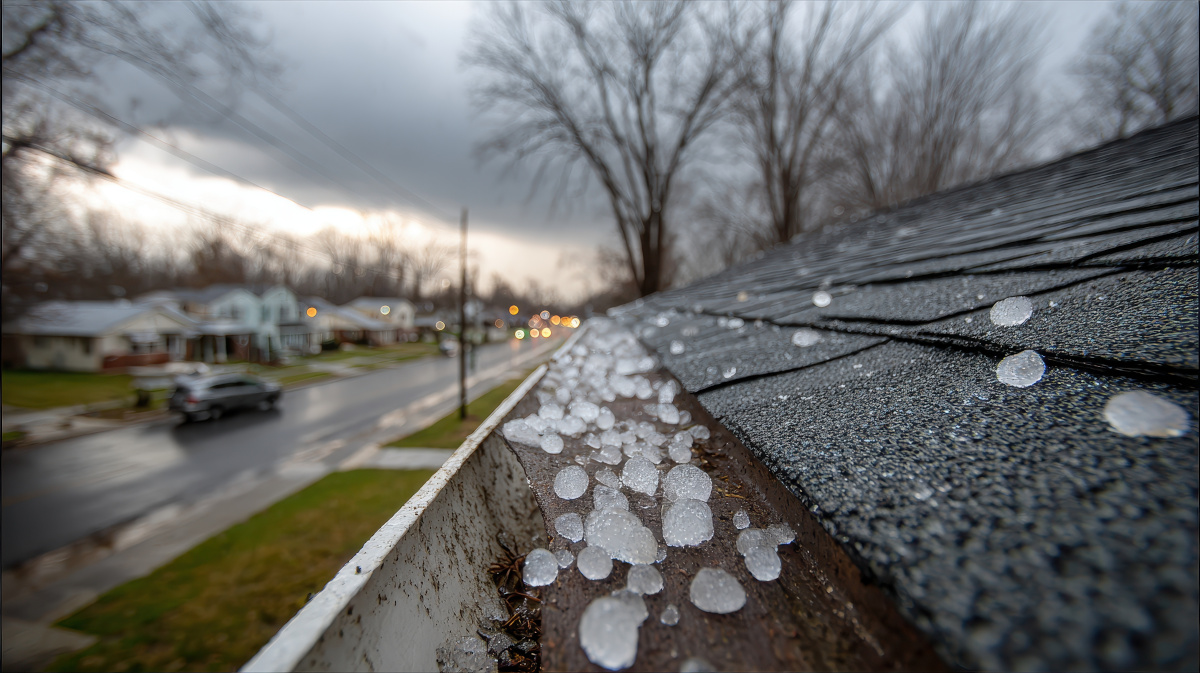
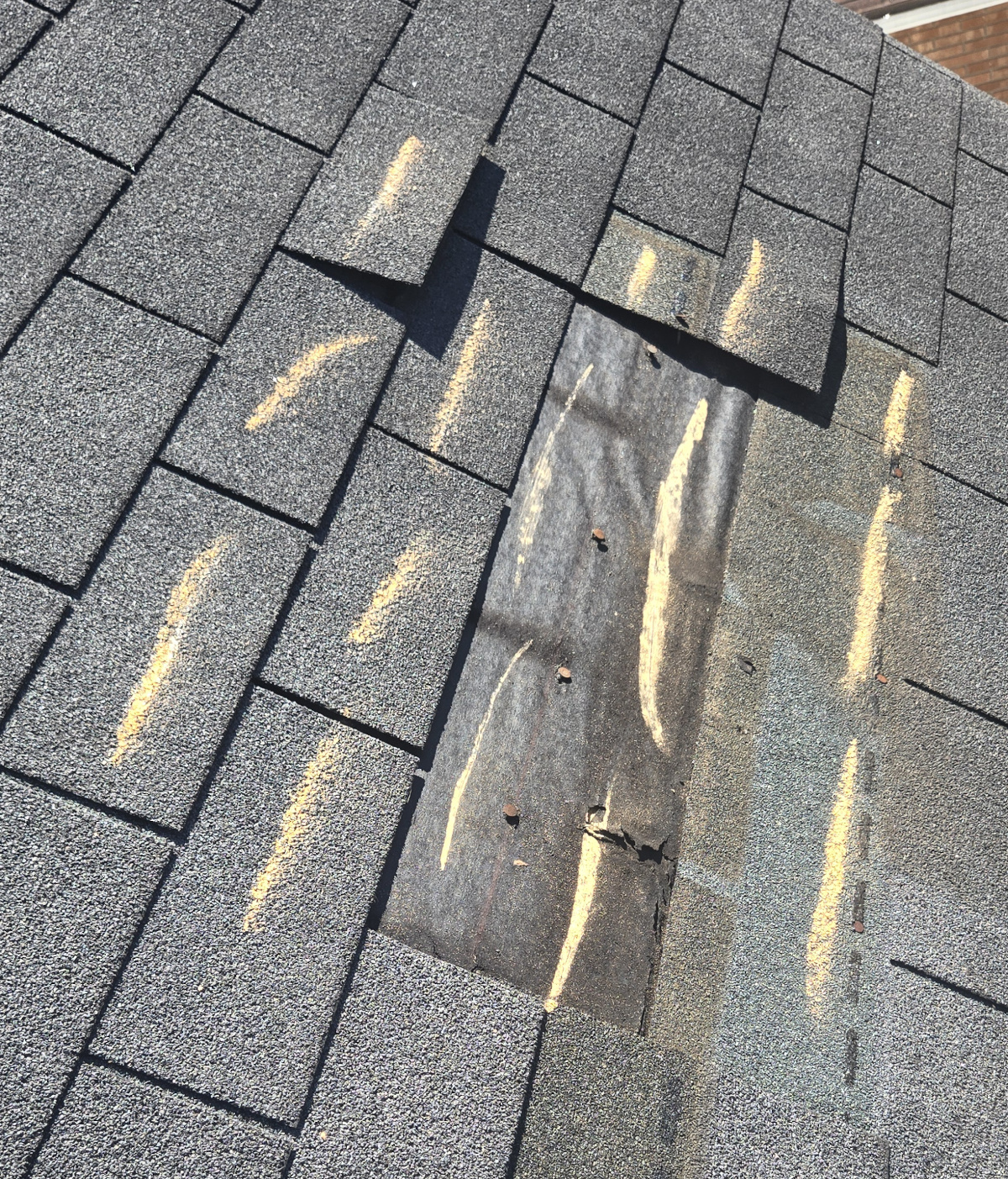
 After a hailstorm rolls through Greensboro, most homeowners do one thing: they look up. A quick scan of the roof, maybe a walk around the yard to check for granules in the gutters, and if nothing obvious jumps out, they assume everything is fine. The roof gets all the attention, and the siding and windows get almost none.
That is a costly mistake. Hail does not only damage roofs. It hits every exposed surface on your home at the same velocity, and the damage it leaves on siding and windows is just as real, just as covered by most homeowner insurance policies, and just as capable of causing serious long-term problems if it goes unaddressed. The difference is that hail damage on siding and windows is quieter. It does not always announce itself with a visible hole or an active leak. It hides in plain sight, and by the time the consequences show up, the storm that caused them is months in the past.
This guide walks through exactly what to look for on both surfaces, why the damage matters even when it seems minor, and what Greensboro homeowners should do after a storm to make sure nothing is missed.
Why Siding and Windows Take a Beating in Greensboro Hailstorms
Greensboro and the surrounding Piedmont Triad region sit in a part of North Carolina that sees meaningful hail activity, particularly during spring and early summer storm seasons. The storms that move through this part of the state regularly produce hail in the one-inch to two-inch range, and occasionally larger. That is enough to cause functional damage, not just cosmetic marks, on both siding and window components.
The direction of impact matters too. Hail rarely falls perfectly vertical. Most storms involve wind-driven hail that strikes at an angle, which means the vertical surfaces of your home, your siding, your window frames, your trim, and your fascia, take a direct hit rather than a glancing blow. In many storms, the south and west-facing sides of a home take substantially more impact than the roof itself.
Understanding this helps explain why a roof inspection alone is not sufficient after a significant storm. If your roof shows hail impact, there is a very high probability that your siding and windows were hit just as hard or harder on the sides of the home that faced the storm.
How to Spot Hail Damage on Vinyl Siding
Hail damage on vinyl siding ranges from immediately obvious to subtle enough that most homeowners walk right past it. Knowing what each type looks like helps you conduct a meaningful inspection rather than a surface-level glance.
Cracks and splits in the siding panels
Direct hail impact on vinyl siding often produces a sharp crack or split in the panel at the point of contact. On larger hail, this can be a clean puncture or a spider-web crack radiating outward from the impact point. On smaller hail, cracks may be hairline fractures that are easy to miss unless you are close and looking directly at the surface. Run your hand carefully along the panels and feel for raised edges or irregularities that your eyes might skip over.
Dents and dimples
Vinyl siding, particularly older panels that have become more brittle over time, often shows round dimples or dents at impact points. These are sometimes visible as shallow depressions across the face of the panel. In direct sunlight, angling your line of sight along the panel surface rather than straight at it makes these depressions much easier to see. Look for a pattern of consistent circular marks spaced across multiple panels, which is the signature of hail rather than random impact from other debris.
Chipping and gouging of the surface layer
Some hail impacts remove material from the surface of the siding rather than cracking it cleanly. This shows up as chipped or gouged areas where the outer surface texture of the vinyl has been displaced. On painted or colored siding, this often appears as lighter-colored spots against the panel’s original color because the impact has exposed the underlying material.
Loosened or displaced panels
Heavy hail, or hail combined with high wind, can knock vinyl siding panels loose from their locking channels. A panel that has partially separated from the panel above or below it leaves a gap that allows water infiltration, wind-driven rain, and insects to reach the sheathing and framing behind the siding. Walk the perimeter of your home and look for any panels that appear bowed, separated at the edges, or visibly out of alignment with the surrounding panels.
Damage to soffit, fascia, and trim
The aluminum or vinyl soffit panels under your roofline, the fascia boards that run along the roof edge, and the trim pieces around doors and windows are often the most visibly damaged components after a hail event. These pieces are thinner and less rigid than siding panels, and they dent easily. Dented soffit and fascia are some of the clearest indicators that a storm produced hail capable of causing broader damage to the rest of the exterior. If you see dented soffit, do not stop there. Keep looking.
Pro tip: Inspect your siding in the morning or evening when the sun is at a low angle to the surface. Raking light across the panel face makes dents, dimples, and surface irregularities dramatically more visible than they appear under flat midday light. Bring a flashlight for shaded areas under eaves and overhangs.
How to Spot Hail Damage on Windows
Window damage from hail is often misunderstood. Many homeowners assume that if the glass is intact, the window is fine. In reality, hail can cause significant functional and structural damage to windows without breaking the glass at all.
Cracked, chipped, or pitted glass
On direct impact from larger hail, glass may crack or chip at the point of contact. Smaller hail often leaves a pitted or frosted appearance on the glass surface, particularly visible when light passes through at an angle. This pitting is not just cosmetic: it creates microscopic stress fractures that weaken the glass over time and can allow moisture to begin compromising any insulating gas sealed between double or triple-pane units.
Damaged window frames and sash
Vinyl and aluminum window frames and sashes take direct hail impacts and frequently show denting, cracking, or chipping that is not always visible from a casual glance. Examine the frame closely on all four sides, paying particular attention to the exterior face of the frame and the meeting rail where the upper and lower sashes come together. Cracks or deformation in the frame compromise the window’s ability to seal properly against weather.
Compromised weatherstripping and seals
The weatherstripping and perimeter seals around window frames can be damaged or dislodged by hail impact, particularly on windows where the frame has flexed or shifted from impact force. Damaged seals may not be immediately obvious, but they allow air and moisture infiltration that drives up energy costs and can lead to water damage in the surrounding wall framing over time. If you notice drafts or condensation forming between panes after a hailstorm, a failed seal is a likely cause.
Broken insulated glass seals (fogging between panes)
One of the most common post-hail window problems in Greensboro homes is failure of the insulated glass unit seal. When hail impacts the frame or glass with enough force to flex the unit, the seal between the panes can fail. The immediate result may not be visible, but within days or weeks, humid air enters the space between the panes and begins to condense, producing a foggy or hazy appearance that cannot be cleaned from the outside. A fogged window is a failed window from an energy efficiency standpoint and will only worsen over time.
Screen and screen frame damage
Window screens and their aluminum frames are extremely vulnerable to hail impact. Torn screens and bent screen frames are sometimes dismissed as minor nuisances, but they are useful indicators of storm intensity. If your screens are visibly damaged, the windows behind them absorbed the same storm and deserve a close inspection even if the damage is less immediately apparent.
What Hail Damage on Siding and Windows Actually Costs You
The case for taking siding and window damage seriously after a hailstorm is not just about the damage itself. It is about what happens to your home if that damage goes unrepaired.
Cracked or split vinyl siding panels allow water to work behind the siding and reach the house wrap and sheathing beneath. Once moisture penetrates that layer consistently, wood rot, mold growth, and structural deterioration of the wall framing follow. By the time those problems become visible from inside the home, significant remediation is typically required, well beyond what a siding repair alone would have cost.
Failed window seals and damaged frames allow conditioned air to escape and outside air to infiltrate. In a Greensboro summer, that means your cooling system is working harder to compensate for heat gain through compromised windows, with the cost showing up on your monthly utility bills. In winter, the same problem drives heating costs up.
There is also the insurance dimension. Most standard homeowner insurance policies cover hail damage to siding and windows under the same storm damage provision that covers the roof. However, insurance claims have filing deadlines, and documentation of damage needs to happen while the cause is still clearly a recent storm event. Waiting months to assess siding and window damage can complicate or disqualify a claim that would otherwise have been straightforward.
What to Do After a Hailstorm in Greensboro
A systematic approach to post-storm inspection gives you the most complete picture of what happened to your home and the strongest position for any insurance claim.
- Walk the full perimeter of your home within a day or two of the storm, before rain washes away debris that helps document impact patterns
- Photograph every area of damage you find, including close-up shots that show the impact marks clearly and wider shots that establish location on the home
- Check soffit, fascia, and trim first since these components show hail damage most clearly and help you calibrate what to look for on the siding panels
- Inspect window frames and screens on all sides of the home, not just the sides that face the prevailing storm direction
- Check gutters and downspouts for denting, which indicates hail size and provides useful documentation
- Look for paint transfer or impact marks on any painted metal surfaces around the home, including garage doors and exterior light fixtures
- Do not attempt to get on the roof yourself for inspection. Contact a licensed contractor who can document roof damage alongside the exterior inspection
If you find damage on siding or windows, contact your insurance company to initiate a claim and request a professional inspection before any repairs begin. A documented inspection from a licensed contractor carries weight with insurance adjusters and ensures that damage is not overlooked or undervalued during the claims process.
Frequently Asked Questions About Hail Damage on Siding and Windows
Does homeowner insurance cover hail damage to siding and windows?
Most standard homeowner insurance policies cover hail damage to siding and windows under the dwelling coverage portion of the policy, subject to your deductible. Coverage applies when the damage is the result of a specific storm event. Document damage thoroughly with photographs and dates, file your claim promptly, and have a licensed contractor inspect the damage before accepting an adjuster’s assessment.
How small does hail have to be to damage vinyl siding?
Hail as small as three-quarters of an inch in diameter can crack or chip vinyl siding, particularly on panels that have become more brittle from age and UV exposure. One-inch hail is generally considered capable of causing functional damage to most vinyl siding products. Older siding is more vulnerable than newer panels because vinyl loses flexibility over time, making it more likely to crack on impact rather than absorb the blow.
Can hail break double-pane windows?
Hail can crack or break the outer pane of a double-pane window on direct impact, particularly with hail larger than one inch. More commonly, hail causes pitting of the glass surface, damage to the frame and seals, and failure of the insulated glass unit seal, which results in fogging between the panes. The glass does not need to break for the window to be functionally compromised and eligible for an insurance claim.
How long after a hailstorm can I file an insurance claim for siding and window damage?
Insurance policies vary, but most carriers require claims to be filed within one year of the storm event, and many adjusters look for documentation that ties the damage clearly to a specific recent storm. Filing sooner rather than later is always better. Document the storm date, photograph the damage promptly, and consult a licensed contractor for a professional inspection before the claim is filed to make sure nothing is missed.
Should I repair hail-damaged siding even if the damage looks minor?
Yes. Even hairline cracks and small dents in vinyl siding panels compromise the weather barrier that siding provides. Water infiltration behind siding happens gradually and the consequences, including rot, mold, and structural damage to wall framing, develop over months or years before they become visible. What looks like minor cosmetic damage on the surface is often more significant than it appears, and addressing it promptly is far less expensive than addressing the water damage it causes if left unrepaired.
After a hailstorm, the roof deserves attention. But so does everything else on the outside of your home. If you are a Greensboro homeowner who has been through a recent storm and you want a complete exterior inspection, GSO Contracting offers professional assessments of roofing, siding, and windows. Call (336) 215-3823 or request a free inspection online to schedule a visit from their team.