 Quick Answer: Wind-damaged shingles usually show up as missing pieces, tabs lifted or folded back, creased shingles with a straight line across them, and torn ridge caps. Damage tends to start at the roof’s edges, corners, and ridge, where wind pulls hardest, and a creased tab that lies back down can be nearly invisible from the ground.
Wind doesn’t so much push shingles off a roof as pull them up. Air moving fast over the roof creates suction on the surface, and gusts work at any edge they can get under. A shingle that is sealed to the one below it resists that pull. A shingle whose seal has failed acts like a flap. Research by the Insurance Institute for Business & Home Safety (IBHS) identifies the seal between shingles as the most important factor in how they hold up in high wind.
GSO Contracting handles storm damage roof repair for homes in Greensboro, Oak Ridge, and Summerfield, and after a strong thunderstorm, the first job is often working out whether the roof was damaged at all. Missing shingles are obvious. The damage that causes trouble later usually isn’t.
How Wind Damages a Shingle Roof
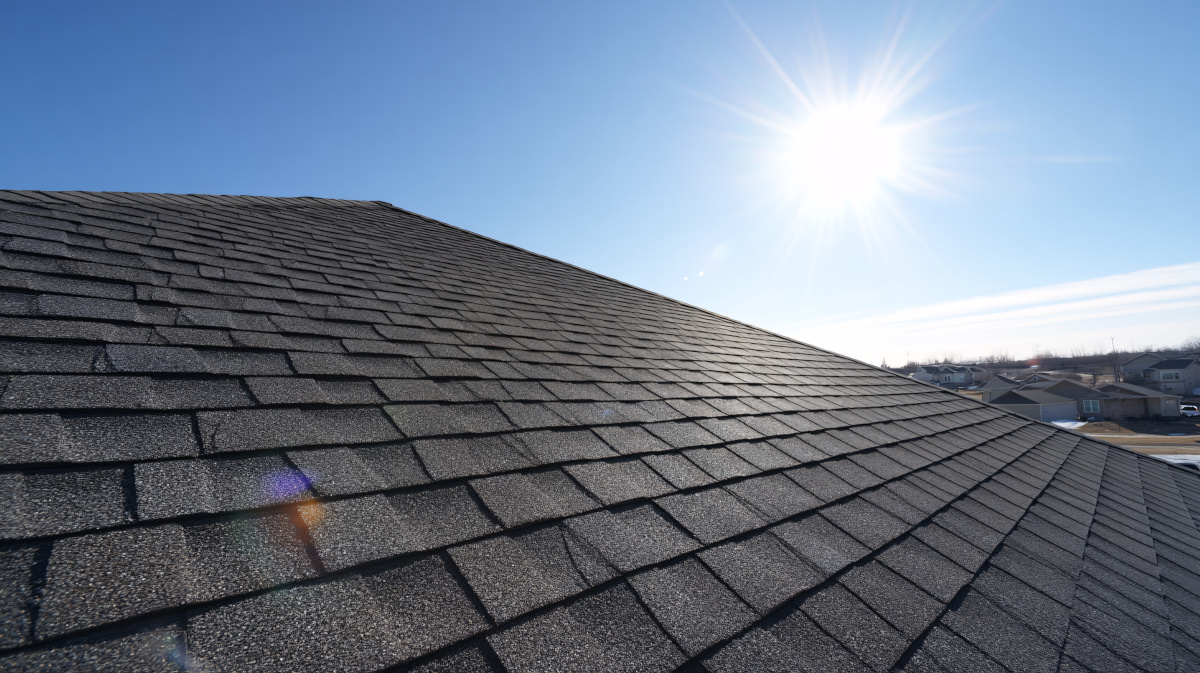
Most asphalt shingles are self-sealing. Each one has a strip of heat-activated adhesive applied at the factory, and after installation the sun warms that strip until it bonds the bottom edge of the shingle to the course below. Once bonded, the roof behaves like one surface, and wind slides over it.
Trouble starts where the bond is missing or weak. Shingles installed in cold weather may not seal until spring. Dust or debris can keep a strip from bonding. Years of heat and sun can weaken a seal that once held. When a gust gets under an unsealed tab, it lifts the tab, bends it back at the nail line, and drops it. Repeat that enough times in one storm and the tab creases, tears, or pulls past its nails.
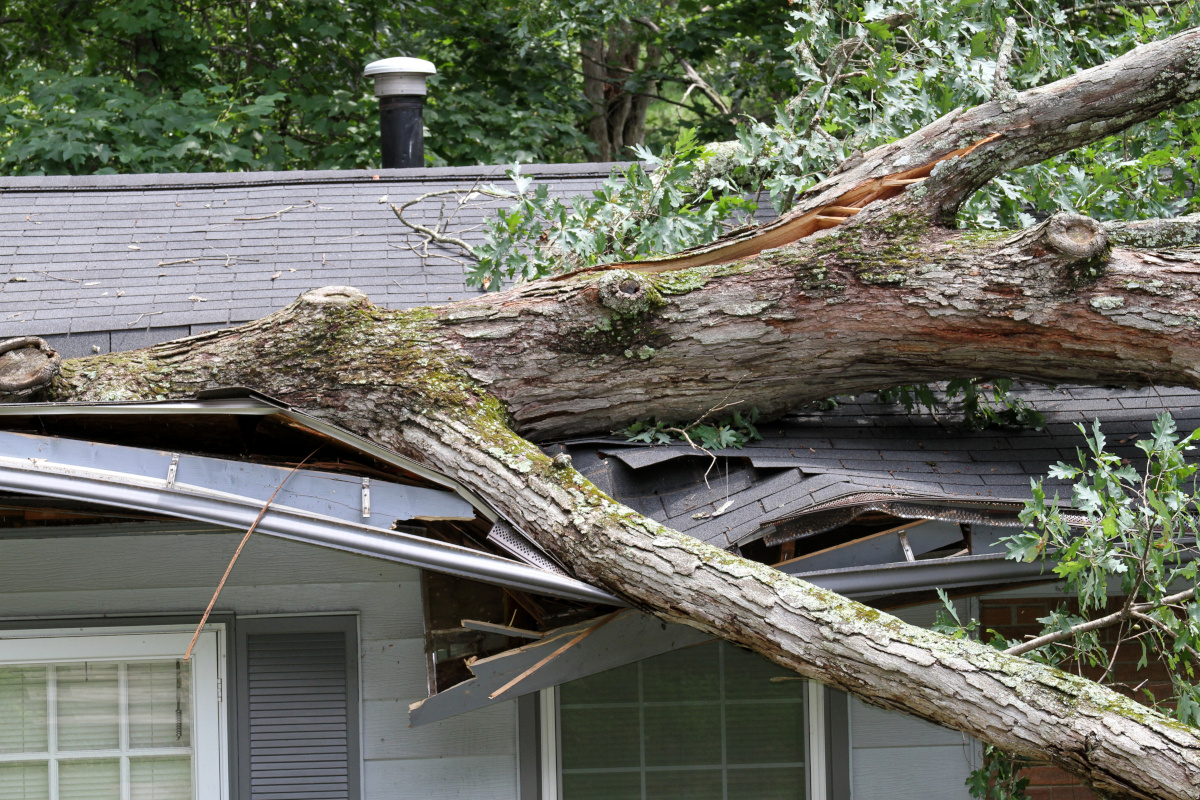
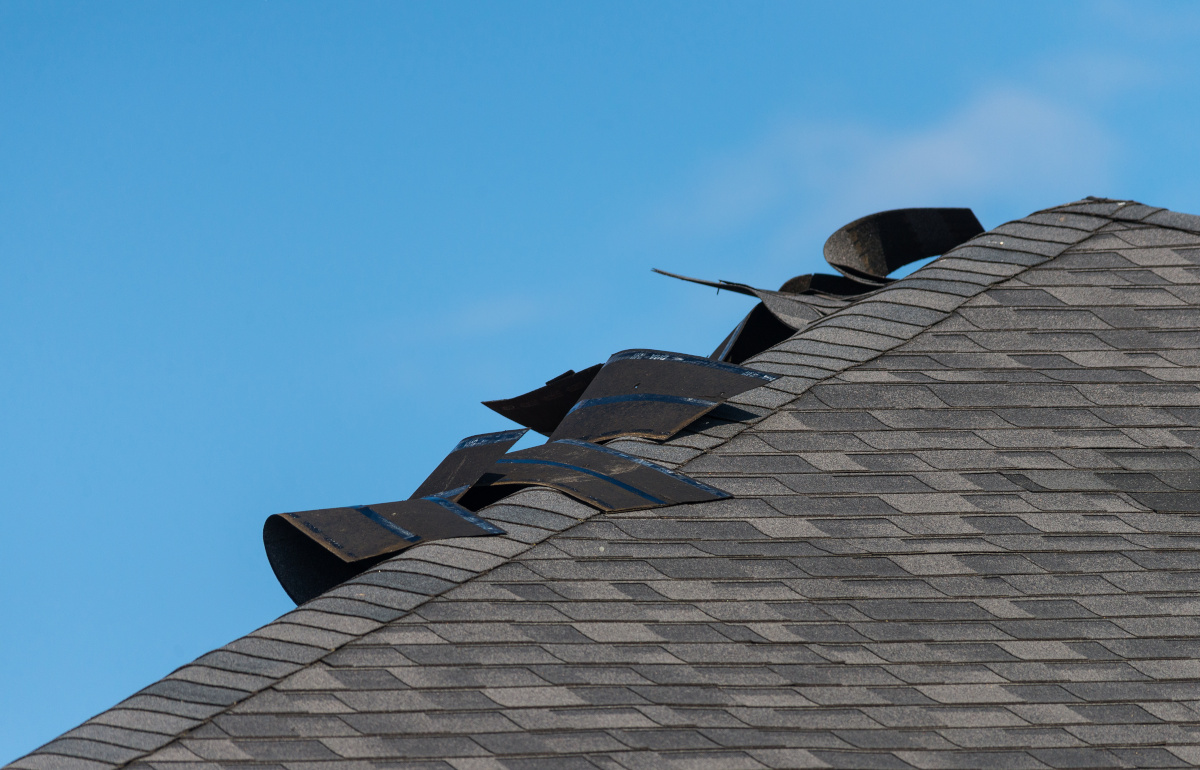
Wind also doesn’t load a roof evenly. Suction is strongest along the eaves, the rake edges at the gable ends, the corners, and the ridge, which is why wind damage tends to cluster there and why an inspection starts at the perimeter. Flying debris adds a second kind of damage: limbs and loose objects can scrape granules, crack shingles, or punch through them.
Signs of Wind-Damaged Shingles
Wind damage has a pattern. It follows the roof’s edges and the storm’s direction rather than scattering evenly across the surface. These are the signs an inspector looks for, and where:
| Sign | What it looks like | Where to look |
| Missing shingles | A patch of a different color, with the black underlayment or the shingle beneath exposed | Eaves, rake edges, corners, and the ridge |
| Creased tabs | A straight line running across the tab near the nail line, sometimes with granules missing along it | Edges and the slopes that faced the wind |
| Lifted or unsealed tabs | A tab edge sitting slightly up, or an uneven shadow line along a course | Eaves and rake edges |
| Torn ridge caps | Gaps or missing pieces along the peak | The ridge and hips |
| Exposed or backed-out nails | Nail heads visible where a tab has lifted | Anywhere tabs have lifted |
| Shingle pieces in the yard | Fragments or whole tabs on the ground | The downwind side of the house |
| Peeled metal edging | Drip edge or flashing bent up or pulled loose | Roof edges and walls |
Missing shingles get most of the attention because they’re easy to see from the driveway. Lifted and creased tabs can outnumber them after a storm, and they are the ones most likely to fail in the next one.
Why Creased Shingles Matter More Than They Look
Creased shingles are tabs that were lifted and folded back far enough to bend the shingle’s mat, leaving a permanent line across it. After the storm passes, the tab usually falls back into place, and from the ground the roof looks fine.
The crease is a weak point that doesn’t heal. A creased tab no longer lies perfectly flat, so it may not reseal, and the bent mat is more likely to tear off the next time a gust catches it. Granules often loosen along the crease line, exposing the asphalt underneath to sun. The fix is to replace the creased shingle, not to glue it down; a dab of roofing cement under a broken tab holds it in place for a while without restoring its strength.
Because creases are hard to spot from below, they can explain a leak that shows up months after a storm that seemed to leave the roof untouched.
Wind Damage Compared With Hail Damage and Normal Wear
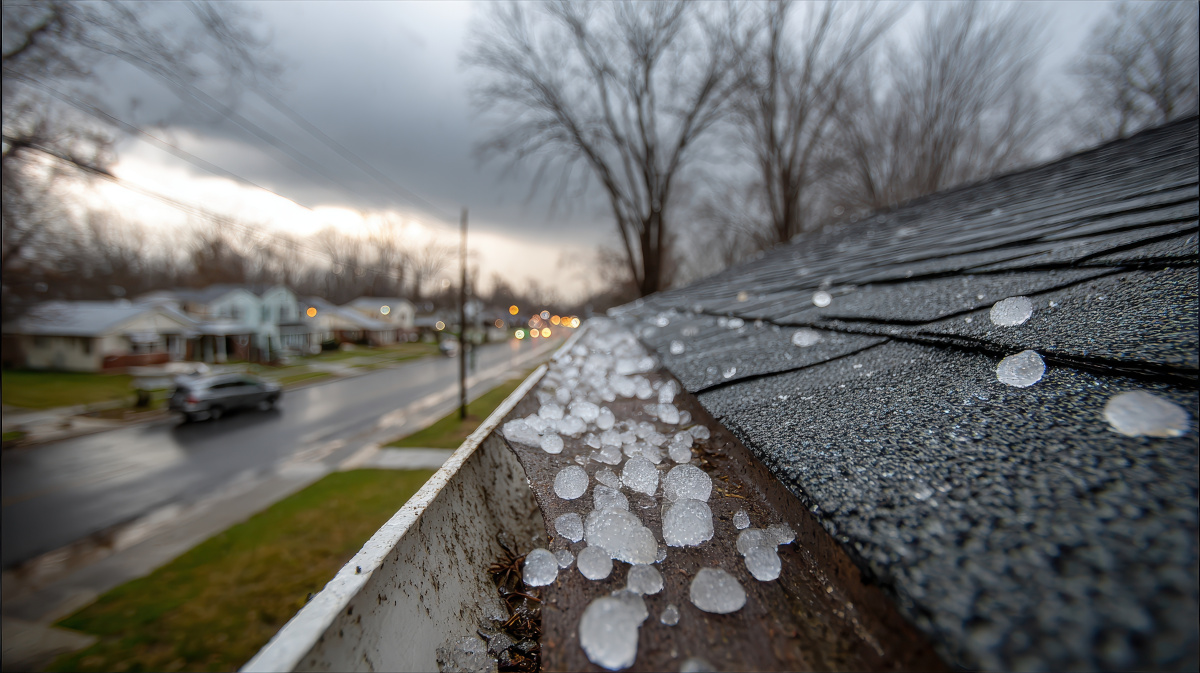
Wind, hail, and age leave different marks, and telling them apart matters for both the repair and any insurance claim. Wind damage is directional and concentrated at edges: lifted, creased, torn, or missing shingles. Hail leaves scattered, roughly circular spots where granules were knocked off, along with dents in gutters and other soft metals, as GSO Contracting’s guide to what hail damage looks like on a roof shows in detail. Normal aging looks more uniform, with granule loss spread across a whole slope, often the one that gets the most sun, and shingle edges that curl.
Strong thunderstorms can bring wind and hail together, so a roof may show both. An inspection should sort the damage by cause, because a roof that was already worn and then lost a few shingles in a storm is a different situation from a sound roof damaged by the storm alone.
How Strong Does Wind Have to Be to Damage Shingles?
Shingles carry wind ratings from standardized tests. Under ASTM D3161, shingles are classed as Class A (60 mph), Class D (90 mph), or Class F (110 mph). Under ASTM D7158, a separate test for self-sealing shingles, the classes are D (115 mph), G (150 mph), and H (190 mph). The letters aren’t interchangeable between the two standards, and both ratings assume the shingles were installed correctly and have sealed.
Compare those numbers with a real Greensboro storm. National Weather Service records show a thunderstorm gust of 53 mph from the southwest at Greensboro on July 31, 2019. That’s a strong gust, but it’s well below the rating of any properly sealed, rated shingle.
That gap is useful when you’re reading a roof after a storm. If an ordinary thunderstorm lifts or creases shingles, the wind usually wasn’t the whole story. The shingles in that area probably weren’t sealed, had aged past the point where their seal held, or weren’t nailed in the right spot. That changes the repair: replacing the torn tabs fixes what you can see, while checking and hand sealing the tabs around them deals with why they failed. If you have the paperwork from your last roof, the shingle wrapper or product name will tell you which wind class was installed.
What to Do After a Windstorm
Start with safety. Stay away from downed power lines and treat every one as live; report it to Duke Energy or call 911. Keep off the roof, since wind-damaged shingles can slide underfoot and a ladder in gusty weather is a fall waiting to happen. The first-day steps, from photos to calls, are covered in what to do immediately after storm damage to your roof.
Once it’s calm, look from the ground:
- Walk around the house and pick up any shingle pieces in the yard. Note which side of the house they landed on.
- Use binoculars to check the eaves, rake edges, corners, and ridge for missing pieces, lifted edges, and uneven lines.
- Check gutters and downspouts for bent sections and for shingle fragments.
- In the attic, look for daylight through the decking and for fresh water stains, especially near the edges.
- Photograph everything with dates before anything is moved or repaired.
Repair or Replace After Wind Damage
Most wind damage is a repair. When the damage is limited to a handful of shingles on a roof that is otherwise sound, a roof repair replaces the missing and creased pieces, refastens or hand seals the lifted tabs around them, and repairs any torn ridge caps or bent edging. One practical issue is color: replacement shingles may not match weathered ones exactly, especially on an older roof or a discontinued line.
Replacement enters the conversation when the damage is widespread, when many tabs across the roof have lost their seal, or when the shingles are old enough that new damage will keep appearing with every strong storm. In those cases, a shingle roof replacement can be the better long-term decision. Roof age alone doesn’t settle that question. The condition of the seals, the mat, and the decking does.
Insurance is a separate step. Coverage depends on your policy, the cause of the damage, and what the insurer’s adjuster finds, so read your policy and report damage promptly. GSO Contracting helps homeowners through the claims process for storm damage.
Look Past the Missing Shingles
The shingles that blew off are the easy part of wind damage. The ones still on the roof with broken seals or creases are what decide how the roof handles the next storm, and they rarely show from the yard. After a storm with strong gusts, especially one that left shingle pieces on the ground, have the edges, corners, and ridge checked up close. GSO Contracting offers free roof inspections, and a strong wind event is a good reason to schedule one.
Frequently Asked Questions
Can wind damage a roof without blowing shingles off?
Yes. Wind can lift a tab, crease it, and drop it back in place, or break the seal between shingles without removing anything. From the ground, the roof may look normal. Those tabs are weaker and more likely to tear off in the next storm, which is why a close inspection after strong wind is worth more than a glance from the driveway.
How can I tell if my shingles have come unsealed?
From the ground, look for tab edges that sit slightly higher than the rest or a shadow line that wavers instead of running straight. During a breeze, unsealed tabs may visibly lift or flutter. A roofer can confirm by gently checking tabs along the edges, where unsealed shingles are most common, without damaging the ones that are still bonded.
What wind speed damages shingles?
Properly installed and sealed shingles are rated to resist wind from 60 mph up to well over 100 mph, depending on the product and test standard. In practice, shingles fail at lower speeds when their seal is weak or missing, when they were nailed in the wrong spot, or when debris hits them. A storm that damages a few shingles often points to a weakness in that part of the roof.
Can lifted shingles be sealed back down?
Sometimes. A tab that lifted but didn’t crease or tear can often be hand sealed with small dabs of roofing cement underneath. A tab that is creased, torn, or missing granules along a fold should be replaced, since the bent mat stays weak even when it is glued down. Either job means working on the roof, which belongs to a professional.
Does homeowners insurance cover wind damage to shingles?
That depends on your policy, the cause of the damage, and what the insurer’s adjuster finds. Damage from a specific storm and wear that built up over years can be treated differently, and deductibles vary by policy. Read your policy, photograph damage with dates, and report it promptly. A professional inspection helps separate storm damage from age-related wear.
Should I have my roof inspected after every storm?
Not after every rain, but after storms with strong gusts, after you find shingle pieces in the yard, or after limbs come down near the house. Wind damage is easiest to document and repair soon after the storm, before more rain finds the weak spots. If the roof is older, a check after any major wind event is a reasonable habit.