 Most roof problems that surface in the fall were actually set in motion during summer. Homeowners tend to blame a leak on the storm that revealed it, but the storm is rarely what caused the damage. The weakening happened slowly, across years of heat cycles, UV exposure, and attic temperatures that most people never think to measure.
Greensboro summers are long and consistently hot, with stretches where surface temperatures on a dark shingle roof can reach 150 to 170 degrees Fahrenheit even on a day where the air temperature sits at 95. That kind of heat is not neutral. It accelerates aging in ways that are invisible from the ground until something fails.
Understanding what heat actually does to a roof helps homeowners recognize the early warning signs and make smarter decisions about inspection timing, maintenance, and when roof repair makes more sense than waiting.
What Does Summer Heat Actually Do to a Shingle Roof?
Summer heat damages a shingle roof through three overlapping mechanisms: thermal expansion that strains fasteners and seams, UV degradation that breaks down the asphalt binder, and granule loss that accelerates once the protective surface layer thins.
Most homeowners think of shingles as a single material, but a standard asphalt shingle is a layered product: a fiberglass mat core, an asphalt coating that provides waterproofing, and a surface layer of ceramic granules that protect the asphalt from UV exposure. Each of those layers responds differently to heat, and they do not age at the same rate.
The asphalt binder is the most heat-sensitive component. As temperatures climb repeatedly into the 140-degree range across an entire Greensboro summer, the binder slowly loses its flexibility. Shingles that were once somewhat pliable begin to harden and become brittle, and brittle shingles crack under the thermal expansion and contraction that happens every single day as the roof heats in the morning sun and cools after dark.
A roofing contractor who has inspected enough aging roofs learns to look for cracking and cupping as the primary visual evidence of binder degradation, since both signs indicate the shingle has lost the flexibility it needs to move with the deck beneath it without breaking.
Why Granule Loss Is a More Serious Problem Than It Looks
Granule loss matters because the granules are not decorative. They are the shingle’s primary defense against UV radiation, and once they begin shedding in significant quantities, the asphalt beneath degrades at a sharply accelerated rate.
A small amount of granule shedding is normal in the first months after a shingle roof installation, as loose granules from the manufacturing process wash off. What contractors look for instead is progressive loss on an older roof: bare patches appearing in the same areas repeatedly, granules accumulating in gutters in visible quantities, or a shingle surface that looks matte and thin rather than uniformly textured.
The reason UV exposure matters so much here is that asphalt is a petroleum product, and ultraviolet light breaks down the chemical bonds that give asphalt its waterproofing properties. A fully granule-covered shingle reflects a significant share of UV radiation away from the asphalt surface. A shingle that has lost a third of its granule coverage is receiving far more direct UV exposure than it was designed to handle, and it ages proportionally faster.
By the time granule loss is severe enough to see clearly from the ground, the underlying asphalt is typically already compromised. Roof repair at that point often addresses the visible damage, but the bigger question is how much of the surrounding field has suffered similar UV exposure at a slower rate.
How Attic Heat Buildup Damages a Roof from the Inside
Attic heat buildup damages a roof from the inside by heating the decking and shingles from below simultaneously with solar heat from above, which accelerates binder degradation and can warp the plywood or OSB decking the shingles are fastened to.
This is the heat damage most homeowners never consider, because the visible damage is on the exterior while the cause is partly interior. A poorly ventilated attic on a Greensboro summer afternoon can hold temperatures well above 130 degrees for hours at a time. That heat radiates into the underside of the roof deck, which heats the nails and fasteners, which conduct heat into the shingles above.
Decking that gets repeatedly driven to high temperatures and then cooled overnight expands and contracts at the fastener points, and that movement eventually loosens the nails that hold shingles in place. A shingle that looks intact from the roof surface can have loose or raised fasteners underneath that will not hold in a wind event, which is one reason storm damage often affects roofs that were already heat-stressed more severely than neighboring homes.
Contractors who inspect attic ventilation as part of a roof evaluation regularly find that adding proper ridge and soffit ventilation extends the life of a roof significantly, because it reduces the temperature differential between the attic and the underside of the deck during peak summer heat.
What Is Thermal Expansion and Why Does It Matter for Roof Repairs?
Thermal expansion is the daily movement that occurs as roofing materials heat up and expand in the morning sun, then contract again as temperatures drop after dark, and it matters because every one of those cycles puts stress on seams, flashing, and fastener points.
A single cycle of expansion and contraction is not damaging in itself. The problem is accumulation. A Greensboro roof goes through this cycle roughly 250 days a year, where the temperature swing between morning and afternoon is significant. Over five years, that is over a thousand expansion-contraction cycles, each one putting slight stress on the points where two materials meet or where a fastener passes through a shingle.
Flashing is where thermal expansion causes the most expensive problems, because flashing connects the roof surface to vertical elements like chimneys, vents, and walls, and those transitions involve materials that expand at different rates. Metal flashing and asphalt shingles do not move the same amount in response to the same temperature change, and over time that differential movement can open small gaps at the flashing edge that allow water to infiltrate behind the shingle rather than over it.
Roofers learn early that a leak traced to a chimney or a wall intersection is almost never a flashing installation failure on its own. It is usually the result of thermal movement working a previously tight seal open over a period of years, which is why inspecting flashing condition is one of the first stops during a roof evaluation.
“The roofs that fail earliest are almost never the ones that had a bad storm. They are the ones with poor attic ventilation and dark shingles on a south-facing slope where the heat never really has a chance to escape. By the time there is a leak, the binder has been compromised for years. The storm just found the weak spot.”
Hermen Mendoza, Roofing Contractor, GSO Contracting Inc.
What Does Heat and UV Damage Look Like on a Shingle Roof?
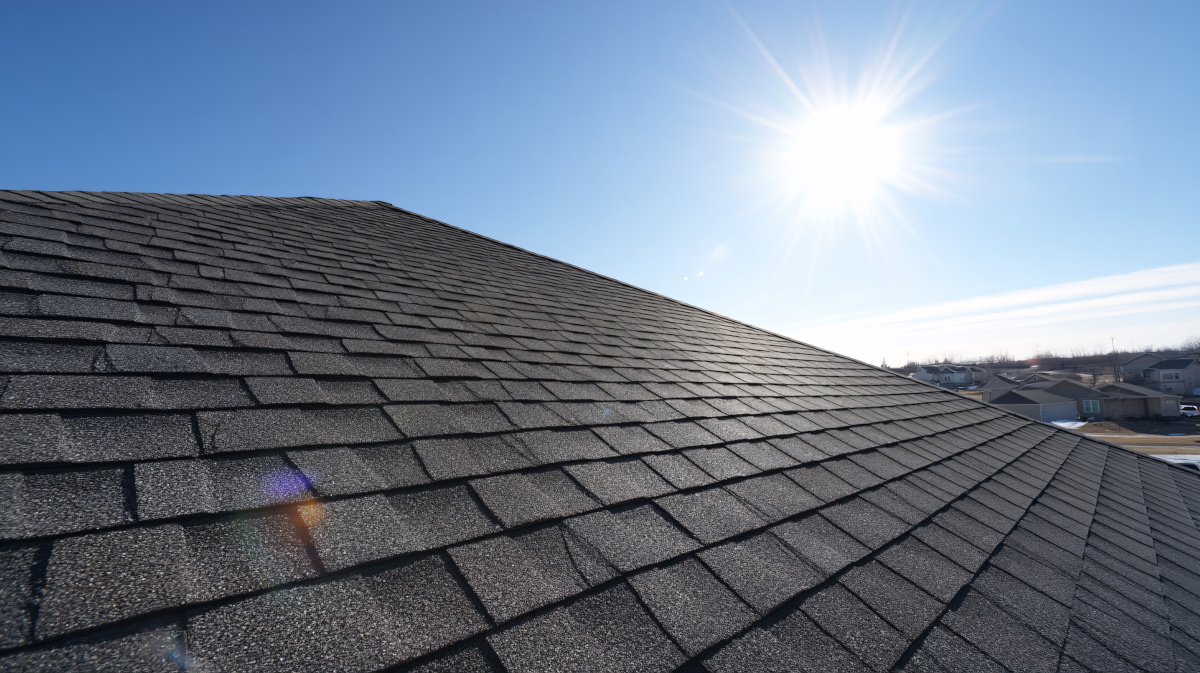
Heat and UV damage on a shingle roof is visible as curling or cupped shingle edges, bare or discolored patches where granules have shed, surface cracking across the face of individual shingles, and a generally faded or bleached appearance across the field.
- Curling or cupping at shingle edges, where the corners lift away from the surface below
- Bare patches or dark spots where granule coverage has thinned significantly
- Visible cracking across the face of shingles, often running parallel to the tab edge
- Excessive granules in gutters or at downspout outlets, particularly after rain
- A faded or bleached color across the south and west-facing slopes, which receive the most direct sun exposure
One thing experienced contractors note is that heat damage is rarely uniform across a roof. South-facing and west-facing slopes absorb the most direct sun and typically show the earliest and most severe degradation, while north-facing slopes on the same structure may look years younger. That pattern helps identify whether a roof is approaching the end of its useful life overall or whether isolated roof repair can address the worst areas first.
How Greensboro’s Climate Accelerates Roof Aging
Greensboro’s climate accelerates roof aging through the combination of long, consistently hot summers, high humidity that prevents roofing materials from cooling fully at night, and periodic severe weather that finds whatever heat-induced weaknesses have already developed.
North Carolina’s Piedmont region experiences a significant number of days each year where the heat index exceeds 100 degrees, and that heat index reflects the felt temperature, not the surface temperature of a dark roofing material absorbing direct sun. The thermal load on a Greensboro shingle roof over a typical summer is substantial, and it compounds year over year.
Humidity adds a dimension that homeowners in drier climates do not have to consider. High overnight humidity slows the rate at which a hot roof sheds the heat it absorbed during the day, which means the materials stay at elevated temperatures longer than a simple temperature reading would suggest. That extended thermal exposure adds to the cumulative stress on the asphalt binder and the granule adhesion.
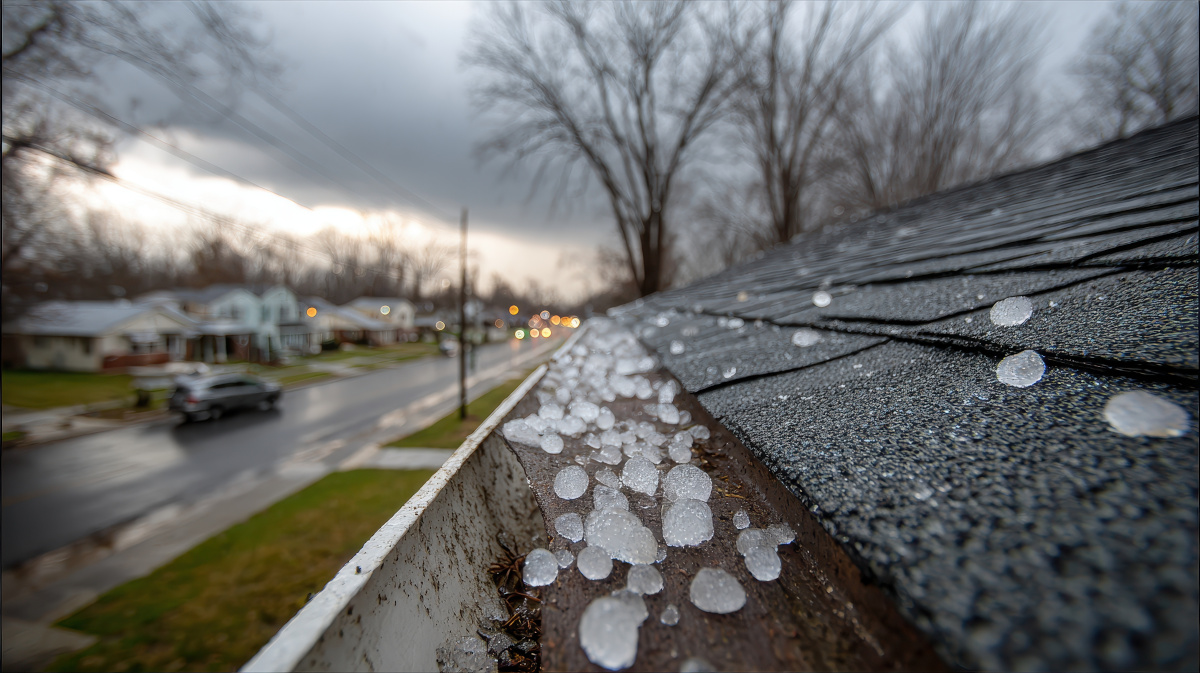
Greensboro also sits in a region that sees periodic hail, and hail damage on a roof that has already experienced granule loss from UV exposure is substantially more severe than hail damage on a newer or better-maintained surface. The granules that normally cushion and deflect hail impact are already partially gone, which means the hail reaches the asphalt layer more directly and causes more damage per impact.
What Should a Homeowner Do to Limit Heat Damage to the Roof?
Homeowners can limit heat damage to a roof by ensuring proper attic ventilation, scheduling a professional inspection every two to three years, keeping gutters clear so granules can be monitored, and choosing lighter-colored or impact-resistant shingles during roof installation.
Attic Ventilation
Proper ridge ventilation at the peak and soffit ventilation at the eaves creates a convective airflow that draws superheated air out of the attic before it can drive additional heat into the underside of the deck. A roofing contractor who inspects attic ventilation as part of the evaluation can identify blocked soffits or inadequate ridge vent coverage that is silently accelerating roof aging.
Shingle Color and Material Selection
Lighter-colored shingles reflect more solar radiation than dark shingles, which directly reduces the surface temperature differential the roof experiences on a hot summer day. During a shingle roof installation or replacement, selecting a lighter tone or a product with a higher solar reflectance index can meaningfully extend service life in a climate like Greensboro’s, particularly on south and west-facing slopes.
Inspection Timing
Late summer or early fall is an ideal time to schedule a roof inspection, since any damage accumulated through the hot months is visible and can be addressed before winter weather arrives. Roof repair done in September or October is typically more straightforward than emergency repair after a winter ice storm has found the same weakness.
Why Greensboro Homeowners Choose GSO Contracting for Roof Repair and Replacement
GSO Contracting Inc. has served Greensboro and the surrounding area for more than 30 years, evaluating and repairing roofs that have experienced the full range of North Carolina seasonal stress, including the cumulative effects of summer heat and UV exposure that most homeowners do not notice until a leak appears.
As a locally owned roofing contractor, the team understands how Greensboro’s specific climate affects roofing materials over time, which informs the recommendations made during every inspection. Materials used include products from CertainTeed and GAF, both of which offer shingle lines specifically designed for high-heat applications and impact resistance.
Every inspection includes an assessment of attic ventilation, flashing condition, granule coverage, and overall shingle health rather than just a visual pass from the ground, since the most significant heat damage is often not visible from street level.
Frequently Asked Questions About Heat and UV Roof Damage
How hot does a shingle roof get in direct summer sun?
Surface temperatures on dark asphalt shingles under direct summer sun routinely reach 150 to 170 degrees Fahrenheit, even when air temperatures are in the 90s, which is well above the threshold that accelerates asphalt binder degradation.
Does the color of a shingle really affect how long it lasts?
Color has a meaningful effect on heat absorption: darker shingles absorb more solar radiation and run significantly hotter than lighter shingles under the same conditions, which accelerates binder aging on south and west-facing slopes over a 20-year lifespan.
Can heat damage be repaired, or does it require full roof replacement?
Localized heat damage can often be addressed with targeted roof repair, but widespread granule loss, binder cracking, or cupping across the majority of the field usually indicates the shingle layer has reached the end of its useful life and replacement is the more cost-effective long-term solution.
How does attic ventilation affect roof lifespan?
Proper attic ventilation reduces the temperature of the roof deck from below by allowing superheated air to escape before it conducts heat upward into the shingles, and roofing contractors consistently find that well-ventilated roofs in similar climates outlast poorly ventilated ones by several years.
What does granule loss actually do to a shingle?
Granules protect the underlying asphalt from ultraviolet radiation, and once granule coverage drops significantly, UV light breaks down the asphalt binder at an accelerated rate, reducing the shingle’s waterproofing ability and shortening the remaining useful life.
How often should a Greensboro homeowner have the roof inspected?
An inspection every two to three years is a reasonable baseline, with an additional post-summer inspection particularly valuable for roofs that are more than 10 years old, since heat damage accumulates silently and is easiest to catch before winter stress compounds existing weaknesses.
Does heat damage void a shingle manufacturer’s warranty?
Heat damage from normal sun exposure is generally not covered under manufacturer warranties, which typically cover manufacturing defects rather than normal weathering, which is why proper installation and attic ventilation matter more than warranty terms for long-term roof performance.
How does thermal expansion damage flashing?
Metal flashing and asphalt shingles expand and contract at different rates in response to temperature changes, and over hundreds of thermal cycles, the differential movement gradually opens gaps at the flashing edges that allow water infiltration behind the shingle surface.
Can impact-resistant shingles also reduce heat damage?
Impact-resistant shingles use a modified asphalt formulation and fiberglass mat construction that tends to hold up better under repeated thermal stress as well as hail impact, making them a practical upgrade in a climate that delivers both challenges.
What is the best time of year to schedule a roof inspection in Greensboro?
Late summer through early fall is ideal, since any damage accumulated during the hottest months is visible and can be addressed with roof repair before winter weather arrives and exploits existing weaknesses.
Schedule a Roof Inspection with GSO Contracting
Heat and UV damage accumulates quietly across years of Greensboro summers, and the roofs that hold up longest are the ones inspected and maintained before a storm is needed to reveal the problem.
GSO Contracting Inc. provides thorough roof inspections that assess shingle condition, granule coverage, flashing integrity, and attic ventilation together, giving homeowners a complete picture of where the roof stands and what it needs. Homeowners concerned about heat damage, planning ahead for a shingle roof installation, or dealing with a roof that has seen better days can reach GSO Contracting at (336) 215-3823 for a free estimate.