 Homeowners researching siding materials quickly discover that every product sounds excellent on its manufacturer’s website. The marketing language is nearly identical across materials: durable, low-maintenance, weather-resistant, long-lasting. None of that helps a Greensboro homeowner figure out which material will actually hold up through 95-degree summers with humidity to match.
The performance differences between vinyl siding and fiber cement become clearest in climates like the Piedmont’s, where heat, moisture, and temperature swings throughout the year stress exterior materials in ways that mild-climate test conditions do not capture.
This comparison covers how each material actually behaves in the field, where each one tends to fail, what contractors notice after years of installing and repairing both, and which one is typically the better fit for the homes and conditions common across Greensboro and the surrounding area.
What Is Vinyl Siding and How Does It Hold Up Over Time?
Vinyl siding is a rigid PVC plastic cladding product manufactured in long horizontal panels that interlock at the edges, requiring no painting, resisting moisture absorption, and maintaining its color through a pigment that runs throughout the thickness of the material rather than sitting only on the surface.
The through-color construction is one of vinyl’s most underappreciated practical advantages. A panel that gets scratched or chipped does not reveal a different color underneath the way painted fiber cement does, and a small scratch on a vinyl panel is far less visually noticeable than the same damage on a material that was painted after manufacture.
Vinyl does have a thermal expansion characteristic that matters significantly in a climate like Greensboro’s: the material expands and contracts measurably in response to temperature changes. Properly installed vinyl siding has to be hung loosely enough to accommodate that movement, since panels that are nailed too tight will buckle and warp as temperatures rise. This is a workmanship detail that separates quality siding installation from a rushed job, and the evidence shows up clearly on the south-facing walls that take the most direct summer sun.
What Is Fiber Cement Siding and What Makes It Different?
Fiber cement siding is a composite material manufactured from portland cement, sand, and cellulose fiber, producing a panel that is significantly denser and heavier than vinyl and that is factory-primed for painting rather than being a finished product out of the box.
The density of fiber cement is both its greatest strength and its most significant maintenance consideration. Because the material is genuinely rigid and heavy, it does not flex under impact the way vinyl does, which makes it more resistant to physical damage from hail, debris, and the occasional ladder or yard tool. However, that same density means fiber cement absorbs and holds moisture at its cut edges and fastener penetrations in a way that vinyl, as a solid plastic, simply does not.
The painting requirement is the detail that changes the long-term cost calculation most significantly. Fiber cement requires repainting on a cycle that most manufacturers suggest as every 5 to 15 years depending on paint quality and sun exposure, and in Greensboro the south and west-facing walls, which face the most intense afternoon sun, typically need attention at the shorter end of that range. A homeowner planning a siding replacement needs to factor that ongoing maintenance into the comparison rather than treating the initial installation cost as the only number that matters.
How Does Greensboro’s Climate Affect Each Siding Material?
Greensboro’s combination of high summer humidity, prolonged heat, occasional severe storms, and moderate freeze-thaw cycles in winter stresses exterior siding materials in multiple ways simultaneously, and each material type responds to those stresses differently.
Heat and UV Exposure
Both materials handle UV exposure reasonably well, but in different ways and with different failure modes. PVC panels can fade over time, particularly in darker colors, because pigment stability under prolonged UV exposure is a function of the specific formulation, and darker colors require more UV-absorbing pigment that breaks down faster. Fiber cement does not fade the same way, since the color sits in the paint layer and fails through chalking and peeling rather than through pigment breakdown in the substrate itself. The practical difference is that PVC fading is gradual and uniform, while fiber cement paint failure tends to be more localized and visually abrupt when it occurs.
The more significant heat-related concern for vinyl is the expansion and contraction cycles mentioned above. A Greensboro summer can push surface temperatures on a south-facing vinyl wall into the 140-plus degree range. Panels that were installed with inadequate expansion clearance buckle visibly in that heat, which is not a material failure but an installation failure with a material-specific cause.
Moisture and Humidity
This is where the two materials separate most clearly in a humid climate. Vinyl is dimensionally stable in the presence of moisture, since solid PVC does not absorb water at the panel face. Fiber cement, despite being far more moisture-resistant than wood, is not waterproof, and its most vulnerable point is at the cut ends of panels and at any point where the factory primer has been compromised.
Contractors who have done years of fiber cement maintenance in humid climates know to look at the bottom edges of panels and the areas around windows and trim transitions, where moisture tends to collect and penetrate into the cut ends. Edge sealing and high-quality paint application at those points are critical, and when they are done inadequately during the original siding installation, the material begins swelling and deteriorating from the edges inward well before the face of the panel shows any visible problem.
Storm and Impact Resistance
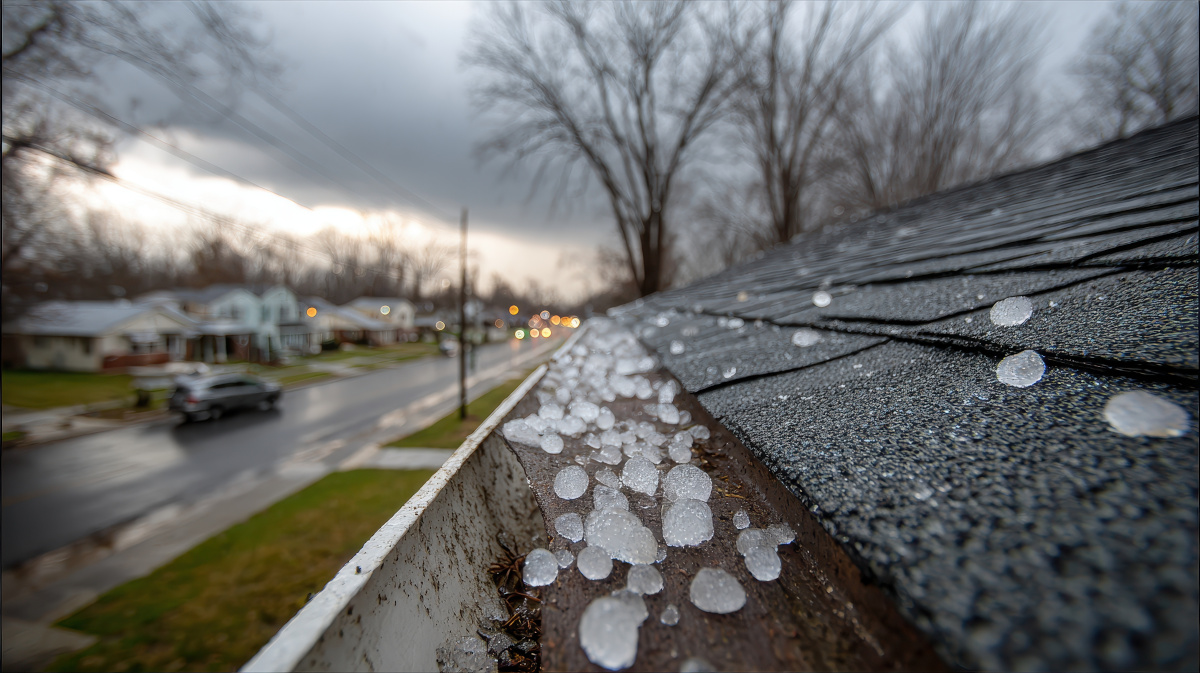
Both materials handle standard wind-driven rain without issue when properly installed and in good condition. Hail is where the comparison shifts. Fiber cement is denser and more resistant to visible impact damage from hail, while PVC panels will dent, crack, or puncture under significant hail impact. However, a damaged vinyl panel is easier to swap out without disturbing the surrounding installation, while damaged fiber cement often requires cutting out and patching sections that need to be repainted to match, which becomes more difficult as the surrounding paint ages.
Where Does Each Material Typically Fail and What Does It Look Like?
The plastic cladding most commonly fails through impact damage, fading on sun-exposed walls, and buckling from improper installation or thermal movement, while fiber cement fails most often through paint failure and moisture intrusion at cut edges, trim transitions, and fastener penetrations.
The failure mode matters because it determines the scope and cost of the repair. A section of damaged siding on a vinyl installation can often be replaced without repainting the surrounding area, since the color is built into the material and replacement panels will closely match existing panels if the same product line is still available. Damaged siding on a fiber cement installation typically requires removing the affected panels, installing new fiber cement, and repainting the repaired area, and matching aged paint on the surrounding panels is rarely perfect.
Contractors see a specific pattern with fiber cement on homes where the original installer did not adequately seal the bottom edges of panels at window sills and trim boards. Water runs down the wall, sits at the trim edge, and wicks into the end grain of the fiber cement panel. The problem develops slowly and invisibly, often going unnoticed until the bottom edges of several panels have swollen enough to crack the paint above them or to visibly separate from the trim below.
“The homeowners who end up unhappy with fiber cement usually had the same problem: they compared the initial install cost, not the 15-year cost. Add three repaints on the south wall, the edge swelling around two windows that needed to be repaired, and the touch-up work after a storm, and it is often more expensive than they expected over the life of the material. That is not a knock on fiber cement. It is a maintenance material that rewards homeowners who stay on top of it.”
Hermen Mendoza, Contractor, GSO Contracting Inc.
What Does Long-Term Maintenance Look Like for Each Material?
Maintenance of the plastic cladding over its lifespan primarily means annual cleaning and occasional panel replacement for impact damage, while fiber cement maintenance requires periodic repainting on a 5 to 15 year cycle depending on sun exposure and paint quality, along with edge sealing inspections and touch-up caulking at transitions.
The maintenance distinction is the single most important factor for homeowners who are planning to stay in their home for 15 or 20 years. Vinyl’s low maintenance profile means the initial cost is close to the total lifecycle cost. Fiber cement’s higher durability comes with a recurring maintenance obligation that compounds over time.
For homeowners who plan to sell the home within five to ten years, the calculus shifts somewhat. Fiber cement has a stronger perceived value and a higher-end appearance that can contribute to curb appeal in a competitive real estate market. Buyers and appraisers often view fiber cement as a premium upgrade relative to vinyl, which can influence resale value at the time of sale even before the long-term maintenance costs become relevant.
Which Siding Material Is the Better Choice for Most Greensboro Homes?
For most Greensboro homeowners prioritizing low long-term maintenance costs and reliable performance in a hot, humid climate without a significant ongoing commitment to exterior upkeep, PVC cladding is the more practical choice, while fiber cement makes more sense for homeowners who value premium appearance and are committed to the maintenance schedule it requires.
This is not a universal answer, and contractors who try to give one are oversimplifying. The right choice depends on several factors specific to the home and the homeowner: how long they plan to stay, what the surrounding neighborhood looks like, what their annual maintenance appetite is, and whether the specific wall orientations on the house will put significant pressure on either material.
South and west-facing walls on a Greensboro home face the harshest combination of UV and heat exposure. On those walls, vinyl’s expansion tolerance matters, and fiber cement’s paint maintenance obligation is at its most demanding. North and east-facing walls are significantly more forgiving to both materials. A home with a large, sun-exposed south elevation is a different siding replacement conversation than a home with most of its exposure on shaded or north-facing walls.
Why Greensboro Homeowners Choose GSO Contracting for Siding Work
GSO Contracting Inc. has served Greensboro and the surrounding Piedmont area for more than 30 years, handling exterior cladding work across homes ranging from post-war construction to newer builds with varied wall configurations and exposure profiles.
The company’s approach to a siding estimate includes evaluating the existing wall assembly, the home’s sun exposure by elevation, and the condition of any underlying house wrap or sheathing before recommending material and discussing scope. Cladding installed over a compromised moisture barrier or damaged sheathing is setting up a future problem regardless of which material goes on the exterior.
Homeowners comparing siding materials or dealing with exterior cladding concerns can reach GSO Contracting at (336) 215-3823 for a free inspection and estimate.
Frequently Asked Questions About These Two Siding Materials
How long does PVC cladding typically last?
Quality PVC panels installed correctly in a climate like Greensboro’s typically last 25 to 40 years, with the primary end-of-life indicators being fading, brittleness from UV degradation, and accumulated impact damage rather than structural failure.
Is fiber cement worth the higher cost compared to vinyl?
Fiber cement is worth the higher initial cost for homeowners who value its appearance, plan to stay long-term, and are realistic about maintaining the paint finish on schedule, but for homeowners who want a set-it-and-forget-it exterior, vinyl typically delivers better value over a 20-year horizon.
Can PVC panels be painted if the color fades?
Vinyl can be painted, but the result is typically less durable than factory color because paint does not bond to PVC as well as it bonds to primed fiber cement or wood, and the thermal expansion of the vinyl will cause paint to peel more quickly than it would on a more dimensionally stable substrate.
Does fiber cement siding hold up to Greensboro**’**s hail storms?
Fiber cement handles hail impact significantly better than vinyl and will not dent or puncture under the hailstone sizes common to the Piedmont region, though larger hailstones can still chip the paint surface and expose the substrate to moisture at the impact point.
Can a homeowner tell from the outside when siding has moisture damage underneath?
Moisture damage under siding is often invisible from the exterior until it has progressed far enough to cause paint peeling, swelling at panel edges, or visible separation at trim transitions, which is why an inspection that checks the wall assembly rather than just the surface is important before any siding installation.
What causes PVC siding panels to buckle or warp?
Vinyl buckling almost always traces back to panels nailed too tightly during installation, which prevents the natural thermal expansion the material needs, or to heat reflected from a nearby surface such as a grill, a glass door, or a neighbor’s window at certain times of day.
How much does the house wrap under the siding affect performance?
The house wrap or moisture barrier behind the siding is critically important to the long-term performance of any exterior cladding, since both vinyl and fiber cement depend on that layer to manage any moisture that gets behind the panels, and damaged or improperly lapped house wrap will cause wall deterioration regardless of how good the siding is.
Should all siding be replaced at once or can damaged sections be replaced individually?
Individual damaged panels can be replaced without doing the full house, but color matching becomes progressively more difficult as existing material ages and fades, which is why many homeowners who start with a partial repair end up doing a complete exterior replacement within a few years as the aesthetic mismatch becomes more noticeable.
Does siding replacement require a permit in Greensboro?
Permit requirements for exterior cladding work in Greensboro depend on the scope of the project and the municipality, and a licensed contractor will typically handle the permit process as part of the job rather than leaving it to the homeowner to navigate.
What is the best time of year to replace siding in the Greensboro area?
Spring and fall offer the most favorable installation conditions, since extreme heat slows vinyl installation work and makes precise fitting more difficult, while extreme cold can make fiber cement more brittle to handle and cut, though experienced crews work through both conditions throughout the year.
Get a Siding Estimate from GSO Contracting
Choosing between vinyl and fiber cement is easier with a professional evaluation of the specific home, its exposure profile, and the condition of the existing wall assembly rather than a general recommendation.
GSO Contracting Inc. provides free siding inspections and estimates across Greensboro and the surrounding Piedmont area. Homeowners planning to replace the exterior cladding or dealing with damaged siding can call (336) 215-3823 to schedule a visit.