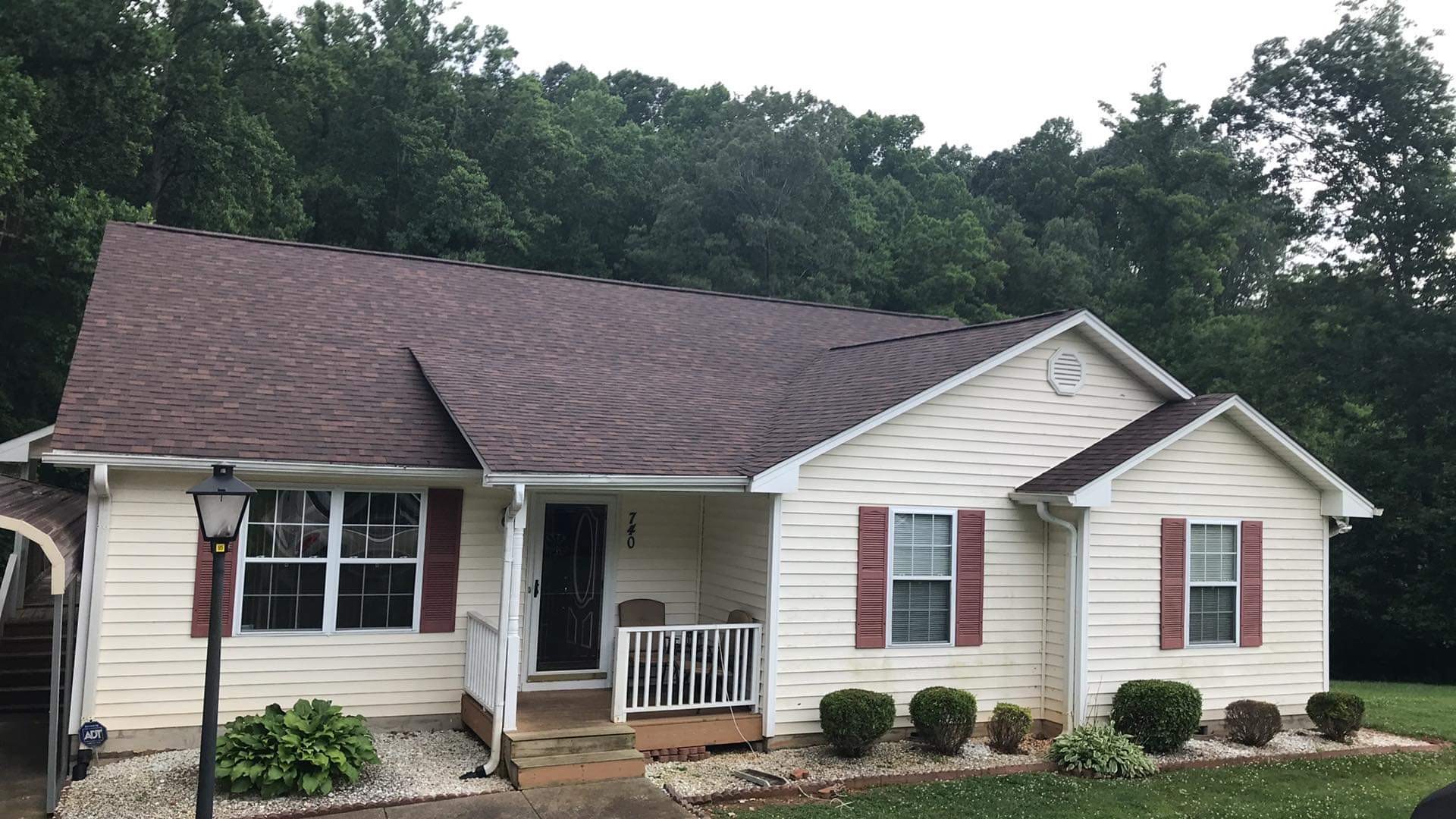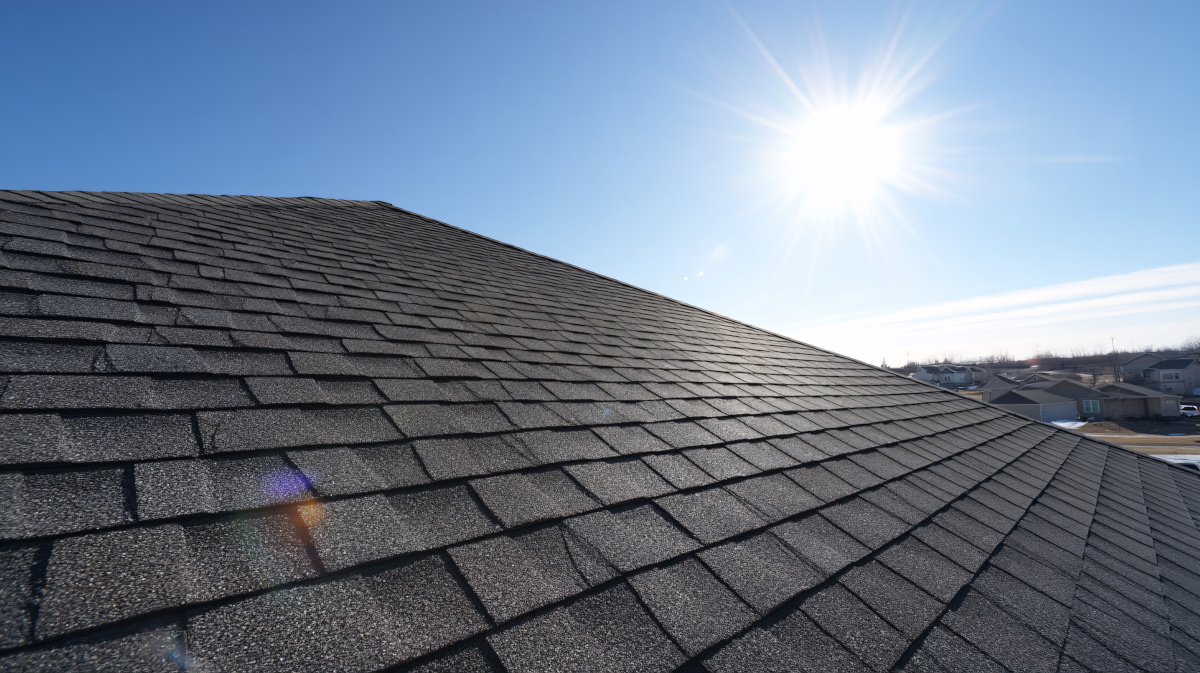

 A roof can have perfectly intact shingles and still leak. This surprises most homeowners, because the shingles are the visible, obvious layer that seems like it should be doing all the protective work.
The reality is that shingles are only one part of a system, and the transitions between the shingle surface and everything else on the roof, chimneys, vents, walls, skylights, valleys, are handled by a completely different material: metal flashing.
Flashing failures account for a significant share of the roof leaks that contractors are called to diagnose, and they are also among the most misunderstood problems homeowners encounter, because the water that shows up on a ceiling rarely enters the house near where the flashing failed.
What Is Roof Flashing?
Roof flashing is thin sheet metal, typically galvanized steel or aluminum, installed at every point where the roof surface meets a vertical element or changes direction, forming a continuous waterproof barrier at the transitions that shingles alone cannot seal.
The logic behind flashing is straightforward: shingles can shed water effectively on a flat or angled surface, but they cannot seal against a chimney, wrap around a pipe, or bridge the angle where a dormer wall meets the roof slope. At every one of those transitions, water naturally collects and runs, and that running water needs a physical barrier that directs it back onto the shingle surface rather than into the gap behind it.
Flashing does that job by tucking behind the adjacent wall or structure on one side and lapping over the shingle surface on the other, creating an overlapping seal that water cannot easily penetrate under normal flow conditions. The word “seal” can be misleading here, though, since properly installed flashing does not rely on caulk or adhesive to keep water out. The geometry of the installation is what does the work, which is why flashing installed with incorrect angles or insufficient overlap will fail regardless of how much sealant is applied on top.
Where Is Flashing Installed on a Roof?
Flashing is installed at every roof transition point, including around chimneys, at the base of dormers and walls that intersect the roof, around all roof penetrations such as vents and skylights, and in the valleys where two roof slopes meet.
Chimney Flashing
Chimney flashing is among the most complex installations on a residential roof because it requires two separate components: step flashing that weaves between the shingles along the chimney sides, and counter flashing that is embedded directly into the mortar joints of the chimney itself. The two pieces overlap, and together they allow the chimney and the roof to move independently in response to temperature changes without opening a gap at the seam. Contractors who have inspected enough chimneys know that sealant applied over old, dried-out flashing is almost never a long-term solution, because the underlying geometry that allows movement has usually already broken down.
Step Flashing at Walls and Dormers
Step flashing refers to individual pieces of metal that are woven into the shingle courses along the base of a wall or dormer. Each piece overlaps the one below it, creating a staircase pattern that redirects water from the wall surface onto the shingle below. The most common mistake contractors find at step flashing locations is that the individual pieces were not woven into the shingle courses but instead laid on top of them, which means water can get under the shingles at every step rather than being redirected away from the wall.
Valley Flashing
Valleys are the channels where two roof slopes meet, and they handle far more water flow than the flat field on either side because they are collecting runoff from both slopes simultaneously. A valley without properly installed metal flashing relies entirely on the shingles themselves, which works initially but develops leaks as the shingles in the valley wear faster than the rest of the roof under the concentrated water volume. Metal valley flashing solves the problem by providing a continuous waterproof channel that does not depend on shingle integrity at the most demanding point on the roof.
Penetration Flashing
Every pipe, vent, and exhaust penetration through the roof surface needs a watertight collar around it, typically a pipe boot or a custom-fabricated piece of sheet metal that seals against the pipe and laps over the surrounding shingles. Pipe boots made of rubber or neoprene are commonly used for plumbing vents and are effective when new, but the rubber degrades over time and is often the first part of a well-maintained roof to develop a leak, since the material cracks and pulls away from the pipe before the shingles show any visible signs of aging.
Why Does Roof Flashing Fail?
Roof flashing fails primarily through three mechanisms: corrosion that eats through the metal over time, thermal movement that works sealant and joints loose across seasons, and improper original installation that creates gaps or insufficient overlap from the start.
Thermal Expansion and Contraction
The single most important thing to understand about flashing is that a roof moves. Metal, masonry, wood, and asphalt all expand and contract at different rates in response to temperature changes, and a Greensboro roof experiences those cycles hundreds of times per year. Flashing installed against a chimney or wall has to accommodate the independent movement of two different structures in response to the same temperature event. Over many years, that differential movement works any sealant in the joint loose, and sealant that was counted on to bridge a gap or reinforce a seam eventually fails and opens the pathway for water.
Corrosion
Galvanized steel flashing, which was standard for decades and is still common in existing homes, is protected by a zinc coating that eventually depletes. Once the zinc is gone, the underlying steel corrodes, and pinhole rust penetrations develop that allow water through even though the flashing appears intact from any reasonable inspection distance. Aluminum is more corrosion-resistant and became more common in newer construction, but aluminum reacts badly to contact with concrete or mortar, which causes the aluminum itself to degrade at points where it embeds into masonry, precisely where chimney counter flashing lives.
Installation Errors
Installation errors are the category that contractors encounter most frequently during roof leak repair calls that were preceded by a previous repair. Common problems include step flashing pieces that are too small to provide adequate overlap, counter flashing that was surface-mounted with sealant rather than embedded into the mortar joints, and valley flashing with insufficient width that allows water to escape the channel at the edges during heavy rainfall. Any of these errors can exist on a roof for years before the underlying problem produces a leak visible enough for the homeowner to notice.
“The most misleading part of a flashing leak is where the water shows up. A chimney flashing failure might drip ten feet away from the chimney because water is following the framing or the decking before it finds a place to come through the ceiling. Homeowners assume the problem is directly above the stain. It almost never is.”
Hermen Mendoza, Roofing Contractor, GSO Contracting Inc.
What Are the Signs of Failing Flashing?
Failing flashing most often announces itself as a roof leaking at or near a transition point, with water stains appearing on ceilings or walls below chimneys, dormers, skylights, or valleys, sometimes well removed from the actual entry point due to how water travels along roof framing.
- Water stains on interior ceilings or walls that appear or worsen during rain, particularly near chimneys or where dormers meet the main roof
- Visible rust streaking on exterior walls below chimney flashing, which indicates the metal above has begun corroding
- Visibly lifted, bent, or separated flashing edges that can be seen from the ground or during a roof inspection
- Cracked, dried, or missing sealant at transition points, which indicates the underlying joint has been relying on sealant rather than geometry
- Dark staining or granule accumulation in valleys, which can indicate water flow problems at the channel
Roofers who specialize in leak diagnosis use a simple rule: suspect flashing first at any leak that appears near a transition or penetration, and suspect the shingle field second. The majority of leaks that appear near chimneys, skylights, or where a roof meets a wall are flashing failures rather than shingle failures, even when the shingles in the area look fine.
Why Is the Roof Leaking Without Any Visible Shingle Damage?
A roof leaking without visible shingle damage almost always points to a flashing failure, since the shingles on a well-maintained roof can be completely intact while the metal transitions around penetrations and intersections have been compromised by corrosion, movement, or installation errors.
This is the detail that confuses homeowners most, and it is also what makes flashing failures particularly expensive when they go unaddressed. A leak at the flashing allows water to enter the building at the seam between materials. That water then travels along the framing, insulation, and decking before it finds a path downward into the living space, sometimes traveling several feet from the entry point before dripping through the ceiling.
The result is that homeowners patch or replace the shingles nearest to the ceiling stain, which does nothing to address the actual leak, and then wonder why the problem recurs. Professional diagnosis of any recurring leak near a transition point specifically includes inspecting all flashing components in the vicinity before drawing any conclusion about the shingle condition, because the two problems have completely different repair approaches.
When Can Flashing Be Repaired and When Does It Need to Be Replaced?
Flashing can sometimes be resecured or re-sealed when the metal itself is structurally intact but has separated from its mounting point, while flashing that is corroded through, undersized, or incorrectly installed from the start requires replacement to achieve a lasting repair.
The temptation in roof leak repair is to apply sealant over whatever looks like it might be letting water in and see if the leak stops. This works temporarily when the underlying flashing is sound but has a gap that sealant can bridge without being asked to span significant movement. It fails when the flashing is corroded, undersized, or positioned incorrectly, because sealant cannot compensate for missing or inadequate metal.
A reliable rule: if a contractor has re-sealed the same flashing location twice in three years and the leak returns, the flashing itself is the problem rather than the sealant application. At that point, replacement is the durable solution, and doing a proper replacement while the roof is still otherwise healthy is far less expensive than replacing flashing as part of a water damage remediation after the leak has been running long enough to affect the decking and framing.
Why Greensboro Homes Are Particularly Vulnerable to Flashing Failures
Greensboro’s climate subjects roofing systems to meaningful thermal cycling across all four seasons, and the combination of hot, humid summers and cold winter events with occasional freeze-thaw cycles creates ideal conditions for the kind of movement and corrosion that cause flashing to fail over time.
The Piedmont region’s older housing stock adds to the concern. Homes built from the 1950s through the 1980s commonly have original galvanized steel flashing that has now been in service for 40 to 70 years. That galvanized coating has long since depleted in most cases, and the underlying steel is corroding at a rate that is not always visible from the ground or even from a quick roof inspection without looking closely at the flashing edges and the mortar joints where counter flashing embeds.
Older homes in established Greensboro neighborhoods that still have their original chimney flashing alongside a newer shingle installation present a particular risk: the roof was replaced, the shingles are still young, and the homeowner reasonably assumes the roof is fine. But the flashing was left in place during the reroof because it did not appear obviously damaged at the time, and now it is failing quietly while the shingles above it look perfectly intact.
Why Greensboro Homeowners Call GSO Contracting for Flashing Issues
GSO Contracting Inc. has served Greensboro and the surrounding Piedmont area for more than 30 years, diagnosing and repairing flashing failures on homes across every age of construction and roof configuration.
The inspection process for a reported leak specifically includes all flashing components in the vicinity of the complaint, not just the shingles nearest to the water stain. The company performs both targeted flashing replacement as a standalone roof leak repair scope and full flashing replacement as part of a complete reroof, depending on the age and condition of the existing metal.
Homeowners dealing with a suspected flashing problem or any recurring roof leak can reach GSO Contracting at (336) 215-3823 for a free inspection.
Frequently Asked Questions About Flashing and Roof Leaks
What material is flashing typically made from?
Most residential flashing is made from galvanized steel or aluminum, with copper used in premium applications where longevity and corrosion resistance justify the higher material cost.
How long does flashing typically last?
Copper flashing can last 70 years or longer, aluminum typically lasts 20 to 40 years, and galvanized steel varies widely depending on local conditions, generally lasting 20 to 30 years before the zinc coating depletes and corrosion begins.
Should flashing be replaced when the shingles are replaced?
Flashing in good condition can sometimes be reused during a reroof, but flashing that is more than 20 years old, shows any corrosion, or was originally undersized should be replaced at the same time, since access requires tearing into the finished roof surface regardless.
Can a homeowner repair flashing without a contractor?
Minor flashing repairs such as re-sealing a lifted edge are within reach for a handy homeowner, but any repair that requires removing shingles, embedding new counter flashing into mortar joints, or weaving step flashing into existing shingle courses should be handled by experienced roofers to avoid creating additional entry points for water.
Why does my chimney leak only in certain types of rain?
A chimney that leaks only during wind-driven rain or heavy downpours but not light rain often has flashing that is holding under low water volume but fails when the volume or direction of water overwhelms the remaining gap at a partially failed seam.
Is caulk alone ever an adequate long-term fix for flashing?
Caulk or sealant is a temporary measure in most flashing applications, since it does not accommodate the thermal movement that roofing materials experience and will crack and separate within a few seasons when used to bridge a significant gap or compensate for missing or undersized metal.
What is the difference between step flashing and counter flashing?
Step flashing refers to individual L-shaped pieces woven into the shingle courses along the base of a wall, while counter flashing is the piece that embeds into the adjacent wall or masonry and laps down over the top of the step flashing to complete the seal.
Will homeowner’s insurance cover flashing repair?
Insurance typically covers flashing damage resulting from a covered storm event but not gradual deterioration from age and wear, which is classified as a maintenance issue under most standard homeowner policies.
How can the source of a roof leak be traced accurately?
Experienced roofers trace leaks by starting at every transition point in the vicinity of the interior water stain, since water commonly travels along framing and decking before dripping through the ceiling well away from the actual entry point.
Can a new shingle roof be installed without replacing old flashing?
New shingles are sometimes installed over intact existing flashing, but this decision should be made on the condition and age of the specific flashing rather than as a default, since leaving old failing flashing under new shingles simply hides a future leak source that will require tearing back into the finished roof to address.
Schedule a Flashing Inspection with GSO Contracting
A roof that is leaking near a chimney, dormer, or skylight is almost always telling a story about flashing rather than shingles, and the only way to know for certain is to inspect the transition points directly.
GSO Contracting Inc. provides free inspections across Greensboro and the surrounding Piedmont area, with flashing evaluation as a standard component of every leak diagnosis and roof assessment. Homeowners dealing with a recurring or unexplained leak can call (336) 215-3823 to schedule a visit.