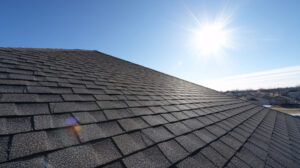
 After a significant storm, the calls that come in follow a predictable pattern. Some homeowners saw the hail falling and immediately knew they had a problem. Others saw nothing but heard the noise and are now wondering whether it was serious enough to matter. And a third group had no idea there was a storm at all until a neighbor mentioned it a week later.
What all three groups share is the same core question: how does anyone actually know whether the roof took damage that needs to be addressed?
Identifying a hail-damaged roof is not as straightforward as looking for holes or missing shingles. Most hail damage is subtle, develops into a real problem gradually, and looks different depending on the size of the hailstone, the age of the roofing material, and where on the roof a contractor is standing when inspecting it.
What Does Hail Actually Do to Roof Shingles?
Hail damages roof shingles primarily by knocking granules loose from the asphalt surface, which exposes the underlying asphalt mat to direct UV radiation and accelerates the shingle’s deterioration from that point forward.
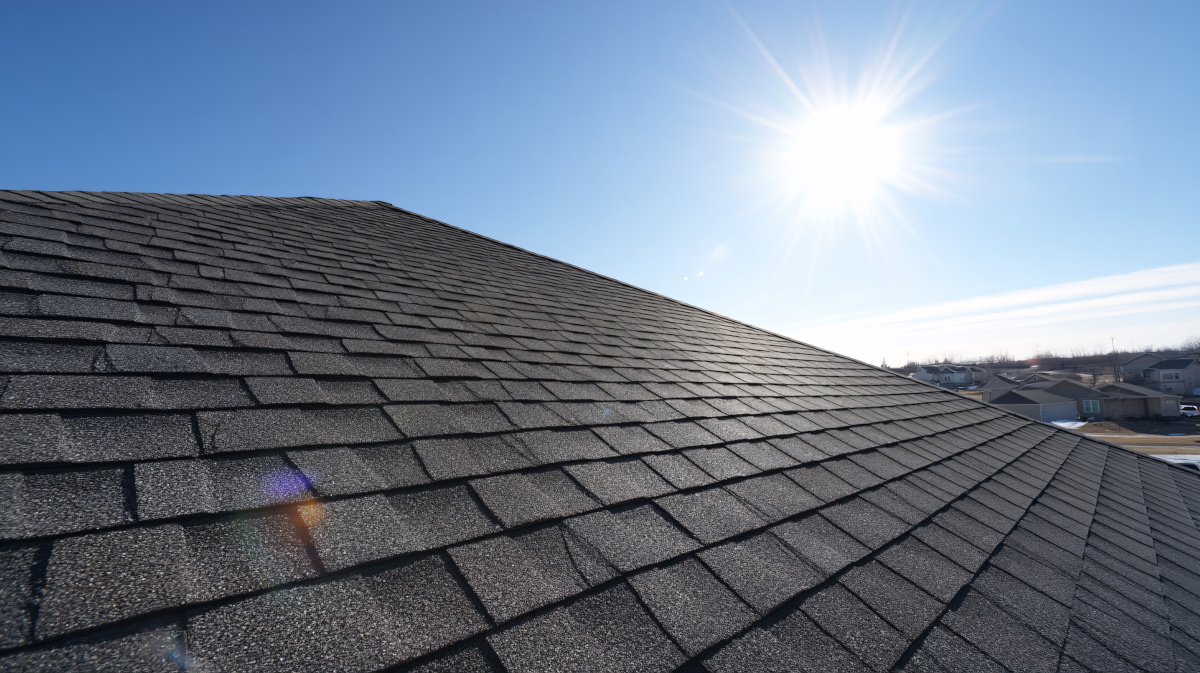
The granules on an asphalt shingle are not decorative. They are the shingle’s primary UV shield, and they are what gives a roof its color and texture. When a hailstone strikes the surface, it does not necessarily crack the shingle or punch through it. What it typically does is dislodge a cluster of granules at the impact point, leaving a small depression where the asphalt is now bare and unprotected.
That impact point looks like a bruise. Under the surface, the asphalt mat has absorbed a force it was not designed for, and the combination of bare asphalt and a weakened mat beneath it means that section of the shingle will age significantly faster than the surrounding area. A single storm can take years off the functional life of a roof without ever causing an immediate leak.
This is the detail that makes hail damage so difficult for homeowners to evaluate on their own: the damage is real, meaningful, and worth documenting, but it often takes months or years before the accelerated aging turns into an active water problem.
What Does a Hail Impact Point Look Like on Asphalt?
A fresh hail impact on an asphalt shingle looks like a dark, irregular spot where granules have been knocked away, often with a slightly soft or spongy feel at the center when pressed, indicating the asphalt mat beneath has been fractured.
Experienced inspectors check for sponginess specifically because it confirms the impact did more than surface damage. An area that has lost granules due to normal weathering over time will feel firm, since the asphalt below has hardened with age. An area that was struck by hail will often feel noticeably different because the mat fibers have been broken and the asphalt itself is compromised at that point.
Color is also a useful indicator, but only on fresh damage. A recent hail impact will look darker than the surrounding area because the asphalt exposed at the impact point has not yet had time to oxidize and lighten. On older damage, this color difference fades, and the impact point becomes harder to distinguish visually from general granule loss.
Storm size matters significantly here. Hailstones under three-quarters of an inch diameter often cause minimal functional damage to newer shingles, while anything above an inch consistently causes the kind of granule loss and mat fracturing that affects the shingle’s long-term performance. The same storm that leaves one roof essentially unharmed can compromise another roof that was already five to eight years into its lifespan.
What Else on the Roof Gets Damaged by Hail?
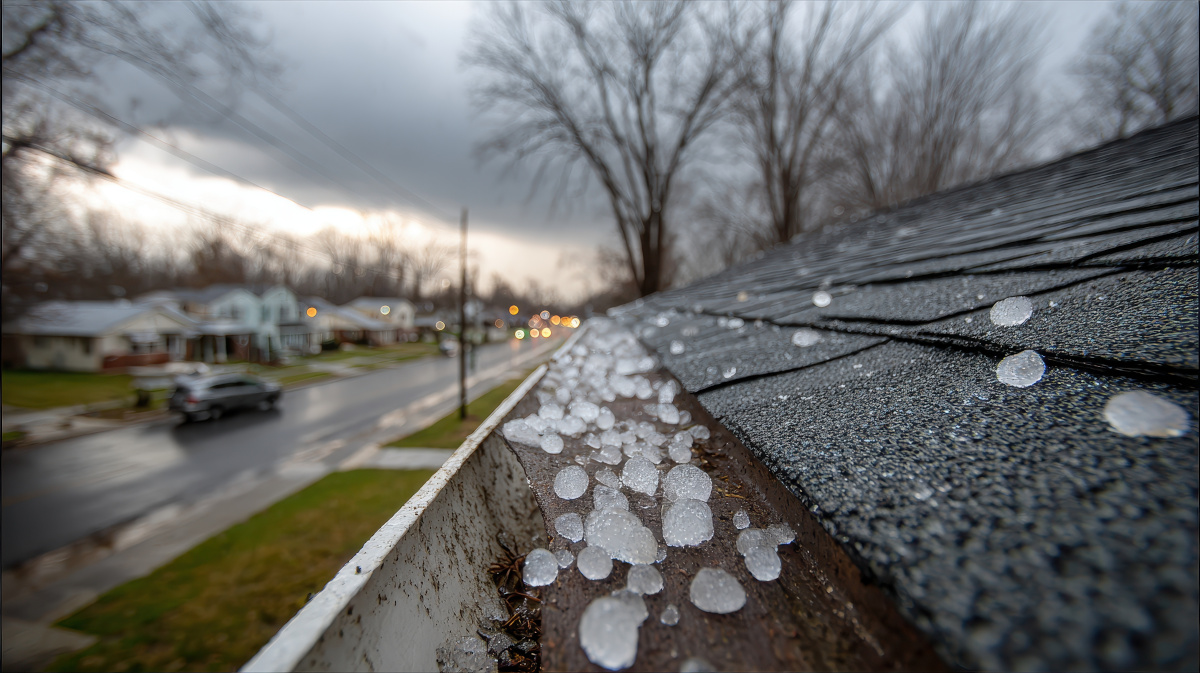
Beyond the shingle surface, hail damage frequently shows up on gutters, downspouts, flashing, ridge caps, and any soft metal components like pipe boots or vent covers, which are often easier to inspect from the ground than the shingle field itself.
Gutters and Downspouts
Gutters are one of the most reliable indicators of hail size and impact force. A storm that leaves dents in aluminum gutters almost certainly left similar impact marks on the shingle surface, since the gutters are a softer target that makes the evidence more visible. Homeowners who cannot safely access their roof can walk the perimeter and look for impact dents along the gutter face as a ground-level indicator.
Ridge Caps
Ridge cap shingles take disproportionate hail damage because they sit at the peak of the roof and face the sky at an angle that intercepts falling hail more directly than the field shingles below. A ridge cap with significant granule loss after a storm is usually a reliable indicator that the field shingles took similar or worse impacts across the main roof surface.
Soft Metal Surfaces
Pipe boots, flashing around skylights, and the lead or aluminum caps on chimney flashing are soft enough that hail leaves clear, rounded dents that are easy to photograph and document for an insurance claim. These soft metal surfaces are what roofers often point to first during an inspection, because they serve as a calibration: if the metal shows clear impact patterns, the shingle field almost certainly took comparable hits.
How Is Hail Damage Different from Wind Damage or Normal Aging?
Hail damage produces circular or roughly circular impact patterns scattered randomly across the roof surface, while wind damage typically lifts, creases, or tears shingles at the edges and seams, and normal aging produces uniform granule loss across an entire slope rather than scattered impact points.
This distinction matters because insurance claims require documentation that the damage is storm-related rather than pre-existing wear, and a trained inspector looks for the pattern of the damage as much as the damage itself. Hail hits land randomly. They are not concentrated at the edges of shingles or along seams, and they do not follow the slope of the roof in a directional pattern the way wind-driven debris damage would.
Age-related granule loss is another common source of confusion. An older roof can shed granules from general weathering and UV exposure in a way that superficially resembles hail impact, but the pattern is different on close inspection. Weathering produces broad, gradual thinning across an entire field, especially on south and west-facing slopes. Hail produces discrete impact zones distributed more randomly across all slopes, including north-facing surfaces that would not show preferential sun-related wear.
Contractors who inspect storm damage regularly develop an eye for this distinction quickly, because confusing the two is expensive: either pursuing an insurance claim for pre-existing wear that will not be covered, or failing to document real hail damage before the evidence fades and the claim window closes.
“The most common mistake I see is homeowners waiting too long after a storm. The soft-metal dents are still there at six months, but the fresh granule loss on the shingles starts to blend in with normal weathering. Insurance adjusters know what fresh impact looks like, and so do we. The window to make a clean, well-documented claim gets narrower every month.”
Hermen Mendoza, Roofing Contractor, GSO Contracting Inc.
What Are the Less Obvious Signs of Hail Damage Homeowners Miss?
Less obvious signs of hail damage include granules accumulating in gutters or at downspout outlets following a storm, a slight change in the roof’s color or texture visible from the ground, and accelerated interior moisture problems that develop in the months after a significant hail event.
Granule accumulation in gutters is one of the most reliable homeowner-visible indicators, because a storm that knocked significant granules loose will flush them through the system the first time it rains afterward. A handful of granules in a gutter after every rain is normal for an aging roof. A large deposit appearing suddenly following a specific storm is a meaningful signal that something changed.
Attic inspection is something most homeowners skip but most contractors treat as essential after a suspected hail event, because the earliest signs of shingle compromise often show up as light penetration through the deck or as unusual moisture on the decking boards before a full leak develops in the living space. A homeowner who checks the attic in daylight after a major storm and sees pinpoints of light coming through the deck has confirmation that the damage is more severe than the exterior might suggest.
Roof repair done promptly at that stage is far less extensive than repair done after water has infiltrated the decking and begun affecting the structure below it.
Why Greensboro Homeowners Need to Take Hail Damage Seriously
Greensboro and the surrounding Piedmont region sit in a geographic corridor that sees meaningful hail activity multiple times per year, with late spring and early summer storms regularly producing hail large enough to cause the kind of impact damage that qualifies for insurance coverage.
North Carolina’s interior regions experience thunderstorm conditions that can produce hail across a relatively narrow corridor, which means one neighborhood takes significant hits while a street away sees nothing but rain. This is part of why homeowners sometimes assume they were spared because their immediate surroundings look undisturbed at ground level, when the roof above absorbed impacts that were invisible from the yard.
Roofing material age compounds the local hail risk considerably. A shingle that still has several years of functional life left on a mild-weather timeline can be pushed to end-of-life faster by a single significant hail event, particularly if the shingles have already experienced several years of Greensboro summers and the granule coverage is not what it was at the time of the original roof installation.
What Happens During a Professional Hail Damage Inspection?
Professional roofers inspect a hail-damaged roof by walking the entire surface, checking each slope systematically for impact patterns, testing the mat integrity at suspected impact points, documenting soft-metal damage for insurance reference, and evaluating the attic from below for evidence of penetration.
A professional inspection is not a quick visual sweep from the eave. Contractors who do this work walk the field in overlapping passes to cover the full surface without missing areas, and they pay particular attention to the directional distribution of impacts to confirm the pattern is consistent with hail rather than other damage types.
Documentation for Insurance Claims
Professional roof installation firms and repair contractors who work with insurance claims regularly understand how to document impact points in a way that supports the adjuster’s review, which includes photographs with measurement references, soft-metal impact documentation, and written descriptions that align with the insurance company’s terminology for storm damage. Homeowners who attempt to document damage on their own often miss the soft-metal evidence or fail to document the impact density in a way the adjuster can use effectively.
When Repair Makes Sense vs. Full Replacement
Not every hail event justifies full replacement. A roof with limited impact density on a shingle surface that still has good granule coverage elsewhere may need only targeted repairs. A roof with widespread impact across the majority of the field, particularly one that was already mid-life before the storm, is almost always better served by full replacement, since the hail has effectively shortened the remaining life of every shingle on the surface, not just the ones with visible impact points.
Why Greensboro Homeowners Call GSO Contracting After a Hail Storm
GSO Contracting Inc. has served Greensboro and the surrounding area for more than 30 years, including assessments following major hail events that have affected properties across the Piedmont region.
The inspection process covers the full roof surface, soft metals, gutters, and attic condition, and the company works with homeowners through the insurance documentation process rather than simply handing over a repair estimate. Materials for replacement projects include products from CertainTeed and GAF, both of which offer shingle lines with enhanced impact resistance that may qualify for insurance discounts depending on the specific policy.
The team provides free inspections, and estimates are provided before any work begins so homeowners understand what is being recommended and why before making a decision about a roof installation or repair project.
Frequently Asked Questions About Hail Damage
How quickly should the roof be inspected after a hail storm?
An inspection within 30 to 60 days of a storm is strongly advisable, since the freshest evidence, particularly the color difference at impact points and the pattern of granule loss, is clearest shortly after the event and becomes harder to distinguish from general aging over time.
Can a roof with hail damage look completely normal from the ground?
A storm-struck roof frequently looks normal from the ground, since individual impact points are small enough to be invisible at distance, which is one of the most important reasons why a close inspection from the roof surface is necessary rather than a visual assessment from the yard.
What size hail causes significant roof damage?
Hailstones three-quarters of an inch in diameter and above can cause functional damage to asphalt shingles, with one inch and above consistently producing the kind of granule loss and mat fracturing that qualifies for insurance claims in most standard homeowner policies.
Does homeowner**’**s insurance cover hail damage to roof shingles?
Most standard homeowner policies cover hail damage to asphalt shingles as a storm-related peril, though coverage terms vary significantly by policy, and some policies in high-hail regions have moved to actual cash value rather than replacement cost for older roofs.
How long after a hail storm can a homeowner file a claim?
Most insurance policies require claims to be filed within one to two years of the storm event, but waiting significantly reduces the quality of the documentation available to support the claim, since the visible signs of fresh impact deteriorate over time.
Will a hail-damaged roof leak right away?
Storm-affected roofing often does not leak immediately, since the shingle system remains partially intact at impact points, but the compromised areas allow accelerated moisture infiltration and UV degradation that typically produces active leaks months to years after the storm.
Can roofers tell the difference between old hail damage and recent hail damage?
Experienced inspectors can typically distinguish recent hail damage from older impacts by the color of the exposed asphalt at impact points, the presence of oxidation around the edges of the granule-free area, and whether the mat beneath feels spongy or has already hardened.
What happens if hail damage goes unrepaired?
Unrepaired hail damage accelerates the shingle’s aging at every impact point, and those areas become the first locations where water infiltrates the roof assembly, which eventually leads to deck damage, interior leaks, and repair costs that typically far exceed the original post-storm roof repair scope.
Do impact-resistant shingles prevent hail damage entirely?
Impact-resistant shingles significantly reduce the degree of damage from hail events but do not eliminate it entirely, since very large hailstones can cause granule loss and mat fracturing even on Class 4 rated products, though typically with less severity than standard shingles.
Is it worth getting an inspection if the storm seemed minor?
A professional inspection after any hail event is worthwhile because hail impact density and damage severity do not always correlate with how dramatic the storm appeared from inside the house, and a documented professional assessment is far more useful than a homeowner’s ground-level observation if a claim eventually becomes necessary.
Schedule a Hail Damage Inspection with GSO Contracting
A storm does not have to look severe to cause meaningful damage, and a roof does not have to leak to have a problem worth addressing.
GSO Contracting Inc. provides thorough post-storm inspections across Greensboro and the surrounding Piedmont area, with documentation support for insurance claims and clear recommendations on whether repair or full replacement is the appropriate next step. Homeowners who want a professional set of eyes on the roof following a hail event can reach GSO Contracting at (336) 215-3823 for a free inspection.