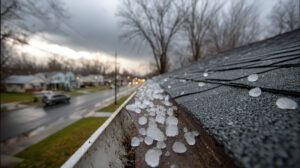
 Summer storms in Greensboro hit hard and fast. A line of thunderstorms can drop an inch of rain in under an hour, push sustained wind gusts past 50 miles per hour, and leave behind branches, debris, and standing water before most homeowners have time to think about what just happened on the roof. By the time the sky clears, the gutters on a home may have already sustained damage that is not obvious from the ground but will cause real problems over the following weeks and months.
Understanding how summer storms affect gutters, and knowing what to look for afterward, is the difference between catching a small problem early and discovering a much larger one when water starts showing up in the wrong places.
What Storm Damage Actually Does to a Gutter System
Storm damage to gutters is not always what homeowners expect. Most people picture dents and crushed sections, and those do happen, but the more consequential damage is usually subtler: gutters that have pulled away from the fascia slightly, end caps that have separated, downspouts that are partially blocked by compacted debris, or hangers that have loosened enough to change the pitch of the channel. These issues do not look catastrophic from the driveway, but they prevent the system from doing its job and put the home’s foundation, siding, and landscaping at risk every time it rains.
A functioning gutter system moves water from the roof surface to a controlled discharge point away from the foundation. When any part of that path is compromised, water finds its own route, and it rarely chooses a convenient one.
How Summer Storms Damage Gutters
Wind
High-speed wind is rarely what bends a gutter channel. The real damage comes from what the wind carries. Branches, limbs, and debris moving at speed act like blunt instruments when they hit a gutter run. A single branch landing across a section of aluminum gutter can bend the channel, dislodge a hanger, and crack a seam in one impact, none of which may be visible unless the homeowner gets on a ladder and looks closely.
Wind also pressurizes the space between the gutter and the fascia board in ways that pull hangers loose over time. A gutter that survived ten previous storms may finally separate from the fascia after a strong enough event because the hardware was already weakening from years of cumulative stress.
Heavy Rainfall Volume
The gutters on most homes were sized based on average rainfall rates, not the peak intensity of a summer thunderstorm. When a storm drops rain faster than a properly functioning system can move it, water spills over the front of the gutter channel. That overflow is not a sign of failure necessarily, but it does create erosion along the foundation perimeter, strips mulch from planting beds, and causes the kind of splash-back at the base of the home that gradually damages siding over time.
The more serious issue is what happens when a gutter is partially blocked with debris before the storm arrives. A channel that is half full of leaves, pine needles, and granules from aging shingles has half the capacity it was designed for. A heavy rainstorm overloads that restricted channel quickly, and the resulting overflow is often channeled in ways that end up directly against the home rather than away from it.
Debris Loading
Gutters are not designed to hold weight. They are designed to move water. When a storm deposits a significant load of wet leaves, pine needles, small branches, and roof granules into a gutter channel, that material becomes surprisingly heavy. A section of gutter loaded with saturated debris can pull hangers loose from the fascia board, cause the channel to sag and change pitch, and in some cases detach from the home partially on one end.
This is one reason experienced contractors almost always check hanger spacing and fascia condition when inspecting gutters after a storm. Hangers that are spaced too far apart, a common issue in older installations, fail under debris loading faster than properly spaced hardware would.
Hail
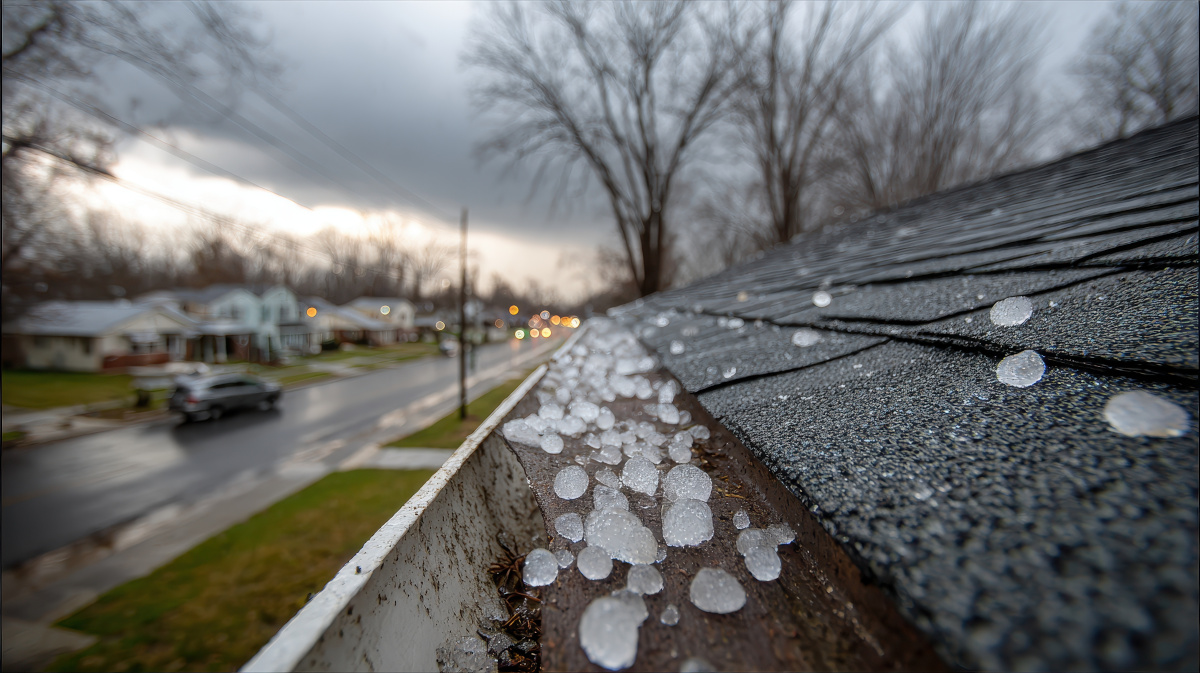
Hail damage to gutters is usually visible from the ground if the stones were large enough, appearing as dimples and dings across the top face of the channel and on downspouts. Smaller hail leaves marks that are harder to see but still meaningful, since repeated hail impacts weaken the material at the impact points and accelerate the corrosion that eventually causes leaks. Hail also accelerates granule loss from asphalt shingles, and those granules tend to wash into the gutters and pack into downspout openings during the same storm, creating blockages that would not have existed otherwise.
The Problems That Follow Damaged Gutters
Gutter damage rarely causes an immediate crisis. The consequences tend to develop over weeks and months, which is part of why homeowners sometimes underestimate how much a damaged or clogged system actually matters.
Water that consistently overflows at the same point along a gutter run eventually erodes the soil directly below it. That erosion can expose or undercut a foundation, create low spots in the yard that hold water after every rain, and destroy landscaping that took years to establish.
Fascia boards behind gutters that have separated or are holding standing water after storms absorb moisture and begin to rot. Rotted fascia is a structural concern, since gutters are attached to it, but it also provides an entry point for insects and water into the eave assembly. Replacing rotted fascia is a separate expense that would not have been necessary if the gutter problem had been caught earlier.
Pooling water near a foundation is perhaps the most consequential long-term effect of a neglected gutter system. Foundations in the Piedmont region of North Carolina sit in soil that expands when wet and contracts when dry. Repeated cycles of saturation and drying, concentrated in one area because water is consistently discharging too close to the home, accelerates the kind of differential settlement that causes cracking and shifting in a foundation over time.
What to Check After a Summer Storm
Inspecting gutters after a significant storm does not require a great deal of technical knowledge, but it does require actually looking closely rather than glancing from the yard.
From the ground, check for:
- Sections of gutter that are visibly sagging or pulling away from the fascia
- Downspouts that have separated at a joint or been knocked loose from the wall
- Obvious dents or crushed sections from debris impact
- Water stains on siding beneath gutter runs, which suggest consistent overflow at that location
- Standing water in low spots near the foundation after the rain has stopped
From a ladder, look for:
- Debris loading in the channel, particularly packed material near downspout openings
- Hangers that are loose, missing, or pulling out of the fascia
- Seams that have separated or are no longer watertight
- End caps that are cracked or separating
- Any section of gutter that is holding standing water rather than draining, which indicates the pitch has shifted
The pitch of a gutter channel is something experienced contractors check on every inspection, because it changes over time without being obvious to the eye. A channel that drains poorly after a storm, even without visible blockage, has often dropped slightly out of pitch due to hanger movement over time. Correcting the pitch is a minor repair when caught early. Left unaddressed, it means every storm is depositing standing water in the same section of channel, accelerating deterioration and preventing the system from functioning as designed.
Gutter Repair Versus Gutter Replacement
Not every storm-damaged gutter system needs to be replaced. The decision comes down to the age of the system, the material, and the extent of the damage.
A gutter that is otherwise in good condition with isolated damage from a single storm event, a crushed section, a separated seam, or a detached downspout, can usually be repaired effectively. The key is making sure the repair addresses the actual failure rather than just patching the visible symptom.
A gutter system that is showing widespread hanger failure, significant sagging across multiple runs, multiple failing seams, or corrosion throughout is telling a different story. A series of targeted repairs on a system in that condition tends to result in the same conversation a year or two later, because the underlying material and hardware are past their reliable service life.
Sectional gutters, which are made from shorter pieces joined at seams, develop more leak points over time than seamless gutters, which are formed as a continuous run and have no intermediate seams to fail. When replacing a storm-damaged system, most experienced contractors recommend seamless aluminum because it eliminates the majority of the failure points that accumulate in an older sectional system.
Gutter Guards and Storm Performance
Gutter guards are marketed as a solution to debris loading, and some perform better than others. But a storm that sends large volumes of debris across a roof can overwhelm most gutter guard designs, and guards do not prevent damage from physical impact, hanger stress, or pitch failure. They also do not eliminate the need for periodic inspection and cleaning, since fine debris, particularly pine pollen and granules, still accumulates on and inside most guard systems over time.
The more useful function of a quality gutter guard in the Greensboro market is reducing how often gutters need to be cleaned, not eliminating that need entirely.
Why Greensboro Summers Put Extra Stress on Gutters
Greensboro sits in a part of North Carolina that sees some of the most intense summer convective activity in the state. Pop-up thunderstorms build quickly in the afternoon heat, produce localized rainfall rates that can exceed two inches per hour, and move slowly enough to saturate an area before dissipating. That combination, high intensity and limited movement, puts far more stress on a gutter system than a steady, lighter rain of the same total volume.
The mature tree canopy throughout many older Greensboro neighborhoods adds to the problem. Pine trees in particular shed needles year round, and deciduous trees drop leaves in quantity twice a year. That debris accumulates in gutters continuously, which means many homes in established neighborhoods are heading into summer storm season with already-compromised gutter capacity.
Homes built more than a few decades ago often have gutter systems that were sized to standards that did not anticipate the intensity of modern storm events, or that have simply aged past the point where the hangers, seams, and material thickness can perform reliably. These older systems are the ones most likely to show significant damage after a strong summer storm.
“Most of the gutter calls we get after a storm are not from gutters that failed in the storm. They’re from gutters that were already in trouble before the storm and finally gave out under the load. A storm reveals problems. It rarely creates them from scratch.”
>
Hermen Mendoza
Exterior Services Specialist
GSO Contracting
Why Homeowners Choose GSO Contracting for Gutter Work
A gutter repair that is done correctly addresses the cause of the problem rather than just the visible damage. That means checking hanger spacing, evaluating fascia condition, confirming pitch, and making sure downspout discharge is moving water far enough from the foundation to be effective.
GSO Contracting has been serving homeowners in Greensboro and the surrounding area for more than 30 years, handling roofing, siding, windows, and gutters on homes of all ages and conditions. That experience means understanding what storm damage actually looks like in this market, how local weather patterns affect exterior systems differently than in other regions, and what repairs hold up over time versus which ones just defer the problem.
Communication matters during gutter work just as it does on a larger project. Homeowners get a clear assessment of what was found, what was done, and what, if anything, should be monitored going forward.
Frequently Asked Questions
How soon after a storm should gutters be inspected?
Gutters should be inspected within a few days of any significant storm. Debris that sits in a wet channel compacts and is harder to clear than fresh material, and any damage to hangers or seams will affect every subsequent rain event until it is addressed.
Can a homeowner tell if gutters are damaged without getting on a ladder?
Some damage is visible from the ground: visibly sagging runs, downspouts that have separated, obvious dents, and water stains on siding below a gutter line. But the most consequential problems, loose hangers, separated seams, pitch shifts, and packed debris near downspout openings, typically require a ladder inspection to identify accurately.
What is the difference between gutter repair and gutter replacement?
Gutter repair addresses specific, isolated problems on an otherwise functional system, such as a damaged section, a separated seam, or a loose hanger. Gutter replacement makes more sense when a system has widespread hanger failure, significant material deterioration, or recurring problems that indicate the system has reached the end of its useful life.
Why do gutters pull away from the house after a storm?
Gutters separate from the fascia when hangers fail, either because they were loosened by years of cumulative stress, because the fascia board behind them has softened from moisture exposure, or because a sudden debris load exceeded what the hanger hardware could hold. Addressing separated gutters promptly is important because a gutter hanging at an angle discharges water against the home rather than away from it.
How does gutter damage affect a home’s foundation?
When gutters fail to direct water away from a home, that water concentrates near the foundation. In the Piedmont region, where clay-heavy soils expand and contract significantly with moisture changes, repeated saturation at the foundation perimeter accelerates differential settlement over time. The gutter system is often the last thing homeowners associate with a foundation concern, but it is frequently a contributing factor.
Are seamless gutters worth the upgrade over sectional gutters?
Seamless gutters eliminate the intermediate seams that are the most common failure points in a sectional system. For homes that need gutter replacement, seamless aluminum is generally the more durable and lower-maintenance option, particularly in an area with heavy seasonal tree debris and frequent summer storms.
Do gutter guards prevent storm damage?
Gutter guards reduce debris loading and can help maintain gutter capacity between cleanings, but they do not prevent physical damage from falling branches, hanger stress from wind loading, or pitch failure over time. Guards also do not eliminate the need for periodic inspection, since fine debris still accumulates in most systems regardless of the guard design.
How long do gutters typically last?
Aluminum gutters, which are standard on most homes in the Greensboro area, typically last 20 years or more under normal conditions. Gutters that hold standing water regularly, have hanger spacing problems, or sit behind mature trees that keep them consistently full of debris tend to deteriorate faster. The condition of the fascia behind the gutter also affects the system’s functional lifespan, since gutters attached to deteriorating fascia cannot be secured properly.
What causes gutters to overflow during heavy rain even when they appear clean?
Overflow during heavy rain, even with debris-free channels, usually means the downspout is partially blocked, the gutter pitch has shifted so water is pooling rather than flowing toward the outlet, or the downspout size is undersized for the volume of water being collected. Each of these causes looks the same from below the roofline but requires a different solution.
Is gutter damage covered by homeowner’s insurance?
Storm-related gutter damage from wind, hail, or falling debris is often covered under a standard homeowner’s policy, though coverage varies by policy and deductible. A documented inspection from a qualified contractor is typically what initiates and supports an insurance claim effectively.
Gutters are easy to overlook until they stop working, and storm season in Greensboro is exactly when that becomes obvious. Homeowners who want an honest assessment of their gutter system after a significant storm can contact GSO Contracting to schedule an inspection. The goal is always the same: understand what the system actually needs, address it correctly the first time, and protect the home from the problems that follow when water goes where it should not.